That Article That Everyone Read This Weekend

Oh, Internet. What can’t you freak out about?
About two days ago, I saw a link to an article called “Thing I Can Say About MFA Writing Programs Now That I No Longer Teach In One,” which I dutifully clicked, read through, and enjoyed a fair amount. Then I scrolled down and looked at the Facebook comments, and saw that a number of people were, to put it mildly, losing their utter shit. People were declaring the writer, Ryan Boudinot, a horrible person, a bitter old hag, and there was a great deal of discussion about how he represented what was the absolute worst about a certain kind of writing (read: literary), and I think a lot of people were having some PTSD flashbacks to moments in college writing classes where they were told that this wasn’t the place to write genre fiction.
First of all, writing advice is highly subjective. Some of it is going to be useful to a person, some of it is going to not be useful – and that depends on which person you talk to. If someone read the Boudinot article and promptly began frothing at the mouth – hey, fine. I do that when I read shit by Annie Lamott. (side note: a lot of people really like Annie Lamott’s writing about writing. I find it tedious, idiotic, and like gumdrops for a certain kind of lazy writer – but again, hey, that’s subjective. My utter loathing for Lamott doesn’t mean that she can’t be incredibly insightful, inspiring, and useful for another writer – and sometimes that other writer might even be someone I like and respect! Because the process is different for every damn person)
I’m a product of both an undergraduate writing program and an MFA program. I’ve done my time, I got over a dozen short stories published in literary journals, and I absolutely feel like my MFA program made a profound impact in me as a writer. And now I’m the published author of three (four in August!) urban fantasy novels, which means that I will never (NEVER) be considered for bigtime fantasy awards, and I will have the pleasure of seeing the reflexive “ew” face on any writer of serious fantasy and sci-fi when I’m initially introduced to them.
In what way is not the most hilarious artistic journey ever? Seriously, it actually is.
Not only am I an urban-fantasy writing hack, but I teach literature classes to college students as my day job – how fantastic is that? I get to force Kafka and Tolstoy and Hurston and Achebe down the gullets of nigh-indifferent undergrads on a daily basis, and then laugh an evil laugh. (plus my actual amused laugh as we get to have conversations about Kafka and Tolstoy and Hurston and Achebe, and what is useful and interesting and, yes, fucking pleasurable about reading these things.)
So I perhaps I have a different view on the Boudinot article. Did I agree with all of it? No. But I enjoyed good portions of it, and I felt like chunks were useful and had resonance. Which is why I’m taking this highly unusual step of adding actual content to my blog by responding to this, rather than just posting another Twitter conversation that involved a highly amusing poop joke. (don’t worry, I’ll get right back to that next time)
Let me go through a few of the Boudinot points.
1. “Writers are born with talent.”
Well, I’d say that caused a good chunk of the freakouts. But Boudinot isn’t saying anything particularly groundbreaking here. In fact, Stephen King said pretty much the same damn thing in On Writing. And I agreed with King, and I agreed with Boudinot.
Does this mean that talent is anointed, and you shall know the coming of an author by certain signs and miracles? No. Writing is goddamn hard work, and it takes years of getting it wrong, of going back and working on it, and honing the damn craft. And, yes, that’s if you were actually born with talent. Talent doesn’t mean that this is going to be easy – it just means that you have that something – that way of looking at the world and conveying something specific in prose, that extra flair with language, that thing that set you apart from the other kids in third grade writing exercises.
Anyone can get an undergraduate degree in creative writing (I did it, it wasn’t that hard), or an MFA in writing (believe me, there are plenty of terrible writers with that degree – I know, I graduated with a few). Take enough classes, put in enough work, and any person can become a decent writer. Being a good writer is something different – and you know the difference when you read one. Doesn’t mean that they were perfect starting out, or that it’s an easier path, but it does mean that when they put in the work and the effort, the outcome at the end is different.
Honestly, why are we having such an extreme reaction to this statement? Do you just think that Boudinot came off as a dick when he wrote it? I’d call him a bit frosty, maybe, and definitely still reeling from a few years within the MFA system, but he’s not saying anything that we haven’t all thought a bit before.
Let me put it differently: it’s clear that Tiger Woods’s dad was hardcore about teaching his son to play golf – perhaps in a way that we might not point to as an ideal parenting choice. But even with all of that training, would Tiger Woods have reached the pinnacle that he did without the benefit of having been born with some talent? Writing isn’t that different.
2. “If you didn’t decide to take writing seriously by the time you were a teenager, you’re probably not going to make it.”
Boudinot’s very next sentence is an equivocation on that statement, which I find utterly hilarious. The man isn’t an idiot – make a broad, sweeping statement (even one softened by the word “probably” rather than “definitely”) and you’re going to see nothing except a series of examples that poke holes in it (Boudinot even offers one himself – Haruki Murakami). But in the broad sense, is he wrong? No, he really isn’t.
RESTRAIN YOUR FREAKOUT FOR FIVE FUCKING SECONDS.
Being serious about writing doesn’t mean that you are a published author.
If I have to pinpoint the moment when I got serious about writing, I’d point to when I was in college – which I suppose could technically be called still being a teenager, but only barely. However, I wrote stories when I was little, I always knew that I was better at writing than the other kids in my class, and I liked the process of writing enough that I did it with some regularity.
But I got serious about writing around the age of nineteen. And then it took me another decade until I got a book published. Serious doesn’t equal published – maybe it’ll take you four or five decades – doesn’t mean that you aren’t serious. I think Boudinot kind of shot himself in the foot to a degree by specifying the word “teenager,” but, hey, tiny quibbles.
If anything, I find Boudinot’s most important statement to be under that – “Being a writer means developing a lifelong intimacy with language. You have to be crazy about books as a kid to establish the neural architecture required to write one.”
Honestly, hell fucking yeah, Boudinot. If you want to write, my feeling is that you’ve got to have a relationship with books, and an enjoyment of language. Again – it doesn’t mean publishing, people. And he isn’t even talking about the action of writing anymore.
3. If you complain about not having time to write, please do us both a favor and drop out.
OF THE MFA PROGRAM. Also, side-note – yes, I utterly co-sign with Boudinot here. When I was a college student I bitched endlessly about my workload, never even dreaming how good I currently had it. When I entered my MFA program, I had just blown out of law school, and I couldn’t believe how much fucking free time I had to write. Compared to law school, the MFA requirements felt like “laze on a field of beautiful flowers for half the day, reveling in nature – now read half a book, write three sentences, and roll into class to marinate in the beauty of language. Then we’ll head to the bar for some beer!”
I might be exaggerating slightly, but seriously. If you can’t write when you’re an MFA student, I’m sorry, but you’re never going to be able to write. Writing while balancing a full-time job and a spouse and possibly kids and something approaching a social life is terribly hard— wait, hold on, I think Boudinot actually covered this portion:
“My experience tells me this: Students who ask a lot of questions about time management, blow deadlines, and whine about how complicated their lives are should just give up and do something else. Their complaints are an insult to the writers who managed to produce great work under far more difficult conditions than the 21st-century MFA student.” (emphasis mine)
Thank you, Boudinot. That put it very nicely.
4. If you aren’t a serious reader, don’t expect anyone to read what you write.
There are people who only want to write, and don’t like to read. At all. It still blows my mind.
Boudinot mentions four books in this section: Infinite Jest, 2666, Gravity’s Rainbow, and The Great Gatsby. I think people went nuts over this because they took this to mean that what they liked to read (I assume fantasy and sci-fi, just a guess) would be judged by this writer as not being serious. Hey, maybe Boudinot is a snob. I don’t know him, I can’t judge. (though I will note that his statement that: “Conversely, I’ve had students ask if I could assign shorter books, or—without a trace of embarrassment—say they weren’t into “the classics” as if “the classics” was some single, aesthetically consistent genre. Students who claimed to enjoy “all sorts” of books were invariably the ones with the most limited taste. One student, upon reading The Great Gatsby (for the first time! Yes, a graduate student!), told me she preferred to read books “that don’t make me work so hard to understand the words.” made me nod very sadly in understanding – I, too, get very sick of teaching lazy readers)
But I think that, as writers, we all need to regularly challenge ourselves as readers. And this means reading out of our comfort zones.
Does it mean you have to pick up Tolstoy? No. But it might mean giving Ann Leckie’s Ancillary Justice a try. Or after you read four books that were right in your wheelhouse, kick back with Parable of the Sower by Octavia Butler. Being serious about your reading means that, in addition to the act of reading for pleasure, you also consider whether something will stretch your horizons, or challenge you as a reader and a person.
Reading for enjoyment is critical and important. But sometimes you don’t know whether you might enjoy something or not. Reading something outside your comfort zone might end in disappointment, or it might end with excitement and discovery.
And along those lines – I’ve read many moving accounts by people who were, at various points in their lives, told that what they loved wasn’t serious or important, and I’m sorry about that. But maybe instead of deciding to then be just as much of a dick back to the genre that you felt was a dick to you (read: literary fiction & classics), you can try, you know, not being a dick. Don’t take a shit on a book or a genre just because you’ve never read it – that applies to the classics (though, like Boudinot, I agree that this isn’t a real genre – what it does mean is that it has held up to a certain scrutiny of time and has become part of a canon of well-regarded books) just as much as to YA.
There are shitty books everywhere you want to look. I’ve read crappy epic fantasy and I’ve read crappy literary fiction. I’ve read crappy YA and books that were touted as classics that I’ve loathed. But I’ve also read books in all those areas, and more, that I loved, that moved me, that challenged me, and that I recommend unceasingly.
Scoffing at the very idea of reading a certain type of book shouldn’t give you any additional street cred in your preferred genre. That applies to fantasy and science fiction just as equally as it does to those in literary fiction.
5. No one cares about your problems if you’re a shitty writer.
“Just because you were abused as a child does not make your inability to stick with the same verb tense for more than two sentences any more bearable.”
Boudinot is harsh. He’s also right.
Kathryn Harrison’s memoir The Kiss is about the incestuous relationship she had as an adult with her father. It is moving, stunning, viscerally painful, and utterly incredible in the way that it is written. I read it in a non-fiction class during my MFA, and I still own the book. Not because it’s about incest, but because of the writing.
I read more than a few stories by classmates in my MFA program (and turned in a few myself) that were just about similar topics – shitty childhoods and periodic instances of molestation. Some were about rape. Some were about death. A story isn’t good or strong because of its topic, or even because of the *truth* of your topic – it’s good or strong because of the writing. And if someone is a bad writer, then even the most heartbreaking and painful topic will not save it.
There was a guy in my MFA program who was an absolutely painful writer. And every story he turned in was the same – about a vastly inappropriate psychosexual relationship between a gay man and his mother. The first one we all read, knew it was about his life, and tried to be tender and gentle as we addressed the difficult topic of trying to help him address the problems within the story that were preventing him from being able to say anything true or moving in the story (no plot, one-dimensional characters, painfully obvious attempts at symbol, verb tense, etc).
Then came the second story, which was about the same topic as the first. And the third story. And the fourth. And this continued for the entire two years that I spent in that program. Taking a workshop with this man (who had survived what was apparently an utter horror of a childhood to become a really standout and great guy, but just not a good writer), became a chore, because he wasn’t there to hone his writing – he was there to tell the story of his vastly inappropriate psychosexual relationship with his mother.
Having a painful life (or even an interesting life) doesn’t necessarily make someone a good writer. It’s a painful, yet true, thing.
6. You don’t need my help to get published.
I totally disagree with what Boudinot is saying here in its entirety.
Agents and editors have a place, and an important one, in the changing publishing landscape. The idea that we should all turn to each other and form our own little self-publishing communes is utter madness, and I think that Boudinot is clinging tightly to his own inner back-to-nature 70s hippie. (full disclosure: I don’t know Ryan Boudinot, so I don’t know whether he is even in the right age-range to be a back-to-nature 70s hippie. I simply have my suspicions.)
7. It’s not important that people think you’re smart.
YES. THANK YOU. I’m just going to copy, paste, and then cosign.
“After eight years of teaching at the graduate level, I grew increasingly intolerant of writing designed to make the writer look smart, clever, or edgy. I know this work when I see it; I’ve written a fair amount of it myself. But writing that’s motivated by the desire to give the reader a pleasurable experience really is best. I told a few students over the years that their only job was to keep me entertained, and the ones who got it started to enjoy themselves, and the work got better. Those who didn’t get it were stuck on the notion that their writing was a tool designed to procure my validation. The funny thing is, if you can put your ego on the back burner and focus on giving someone a wonderful reading experience, that’s the cleverest writing.”
Emphasis mine.
I wonder if people’s response to this article would’ve been demonstrably different if this had been point #1 rather than #7.
8. It’s important to woodshed.
I agree on this one. I think the woodshed, where unpublished novels go to die, was less of a problem back in the days before easy self-publishing. Self-publishing has its benefits, which I won’t deny, but I think there are more than a few authors (myself included) who are desperately grateful that their early efforts died unsung deaths, and never saw the light of day.
It’s hard to let a book die, because you’ve spent so long on it and believed so hard in it. But not everything that hits 100K deserves to be read, which is the danger of easy self-publishing.
In total – everything is subjective, and nothing moreso than writing advice. Just because we disagree (or agree) on whether an article has merit usually doesn’t mean a whole hell of a lot. If you disagreed with Boudinot about everything – fine. But disagree for your own reasons – not because of various sentences that got posted out of context, or because of reflexive defensiveness.
(Very) Advance Readers

Closer. Closer on my prettiness.
Dark Ascension is still six months down the pipeline, but it has officially gotten its first advance reader reaction. Check it out!
https://twitter.com/jaimeleemoyer/status/567185152418123777
WOO!!!!! Now, I was in my office at work when I read this, so I couldn’t do what I wanted, which was to run in circles like an overexcited toddler. So I just fist-pumped like crazy. Hooray!
So, there’s something to look forward to in the future. The six-month future.
In the meantime, everyone’s all caught up on Jaime Lee Moyer, right? Because you only have until October to be ready for the third Delia Martin novel.

Dark Ascension Update!
Fort and Suze’s fourth outing is on track for its August 2015 release!
Firstly, it has now officially made it through the primary editing pass. This means a few things – mainly that the second chunk of my advance money is released (advances are split into thirds – the first chunk is yours when you sign the contract, the second chunk when your editor determines that the manuscript it at the level that the company deems largely acceptable to publish (completion of primary edits), and the third chunk on publication of the book). This is mainly exciting to my mortgage.
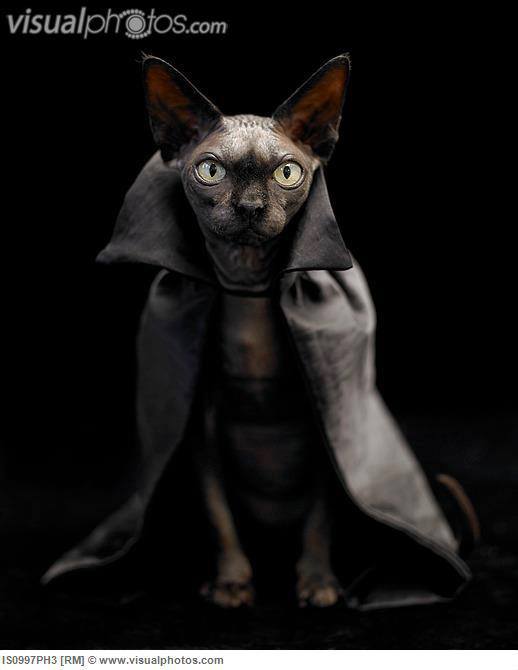
This is an accurate representation of my loan holder. “More money,” it hisses. “Give me MORE money.”
Secondly, it means that the book is on schedule. This was the stage where my editor was completely within her rights to say things like, “Well, maybe you should rethink the last two-hundred pages,” or “I like that the character names stayed the same, but hated everything else,” and then I’d cry and start rewriting. But there weren’t any massive alterations – mostly some trims and tucks, and some rethinking and retinkering on the front end. There was also a major challenge to my editor’s ick factor. Now, I’m on record as having great respect for my editor’s ick factor. That, after all, is why there wasn’t incest cannibalism sex in Iron Night.

This is the face my editor makes when I try to slip incest cannibalism sex into a manuscript.
Yes, that almost happened. It was only months later that I begrudgingly admitted that she might’ve had a point about the incest cannibalism sex, which at the time I thought she was mostly just being a fun-ruiner over.
There was another major editorial ick factor challenge in this manuscript (before you ask, no, it does not involve incest, cannibalism, or sex), but after some serious thought and soul-searching, I decided to leave it in the manuscript. For the sake of science. Whether or not this was a good idea will probably not be determined until August, at which point I imagine readers will make opinions known. I can only hope that readers ultimately decide, as I did, that it was important to the ethos of the world and the direction that I’ve been going with a particular race. Either way, I have a feeling it might show up in one or two reviews. Hopefully described in glowing terms. (of, I guess, “Brennan grossed me out, but it worked for me. Gritty realism for all!”)

This is a semi-accurate representation of me in the moment of choosing to proceed with the scene, despite the ick factor.
Finally, big reveal! The Dark Ascension cover is now up at Goodreads! Feast your eyes upon what is to come:

Thoughts on the cover? Love it? Love it more? Disregard it for the sweet sweet prose, kitsune antics, and Doctor Who jokes waiting inside?
What I Read (and loved) In 2014
The clock is ticking down on 2014. I’m halfway through my current book, but I probably won’t finish it in this calendar year, so I’m going to call it — in 2014 I read 94 books. (edited to add: nope, finished it. 95, and I had to add another book to the list)
I liked a lot of what I read. There were a few that I didn’t really enjoy, a few others that I dragged through, and one or two that I just gave up on, but for the most part I had a great year. I read a bunch of things — scifi, fantasy (epic and urban), literary fiction, nonfiction, classics, biography — and had a lot of fun. Thanks to Goodreads, I not only have an accurate list of what I read (something that I’ve never otherwise been able to do), but I have covers and links. And what better way to finish up a year than a Best Of list?
A few caveats:
+ I liked a lot of things. A lot of those were by the same authors. So rather than put down multiple books by Stephen Blackmoore, Max Gladstone, or Catherine Asaro (I read over a dozen books by Asaro this year), I’m just putting down one.
+ It’s title, picture, cover copy, and links. Links are to Amazon, but definitely consider supporting brick & mortar and indie bookstores!
+ Order is mainly in the order that I read them. So this is my Best Of in fairly chronological order — that’s one of the things I like about Goodreads — I can go back and see what I was in the mood for at various times in the year!
+ Throw comments down below! I love year end lists — a year end list in 2013 was actually how I encountered several of these books!
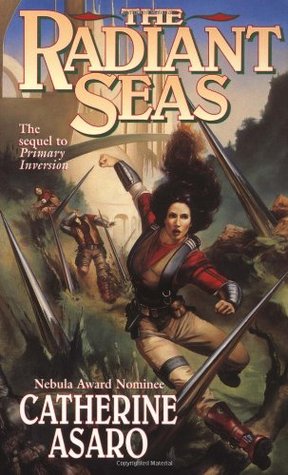
It was the fourth Asaro I read, but one of my favorites. Chronology is tricky with Asaro! Tread lightly.
1. The Radiant Seas – Catherine Asaro (Skolian Empire #3)
Living in exile on a deserted planet, Sauscony and Jaibriol, each the heir to an interstellar empire, become entangled in the machinations of the Skolian Empire. Interstellar war erupts and Jaibriol is snatched away to be the unwilling ruler of the Highton Aristos. Sauscony must lead an invading space fleet to rescue him from his own Empire-without revealing that they are married. With much of interstellar civilization poised on the brink of destruction, it is the devotion of these two lovers, their sacrifices, and their heroism, that might just forge a new order.

I read this and its sequel, BROKEN SOULS, this year. Loved them both. Very dark, very cool. And Blackmoore is definitely someone to follow on Twitter, because he’s hilarious.
2. Dead Things – Stephen Blackmoore (Eric Carter #1)
Necromancer is such an ugly word, but it’s a title Eric Carter is stuck with.
He sees ghosts, talks to the dead. He’s turned it into a lucrative career putting troublesome spirits to rest, sometimes taking on even more dangerous things. For a fee, of course.
When he left L.A. fifteen years ago he thought he’d never go back. Too many bad memories. Too many people trying to kill him.
But now his sister’s been brutally murdered and Carter wants to find out why.
Was it the gangster looking to settle a score? The ghost of a mage he killed the night he left town? Maybe it’s the patron saint of violent death herself, Santa Muerte, who’s taken an unusually keen interest in him.
Carter’s going to find out who did it and he’s going to make them pay.
As long as they don’t kill him first.
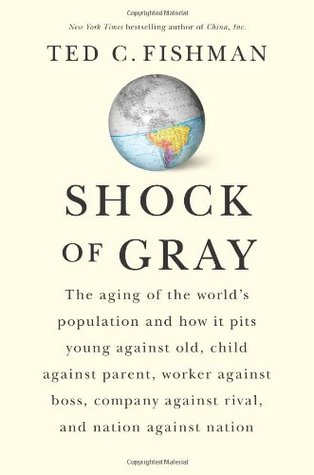
First nonfiction! And it’s a really good one. Stuffed full of fascinating information!
3. Shock of Gray: The Aging of the World’s Population and How It Pits Young Against Old, Child Against Parent, Worker Against Boss, Company Against Rival, and Nation Against Nation – Ted C. Fishman
The world’s population is rapidly aging; by the year 2030, one billion people will be sixty-five or older. As the ratio of the old to the young grows ever larger, global aging has gone critical: For the first time in history, the number of people over age fifty will be greater than those under age seventeen. Few of us understand the resulting massive effects on economies, jobs, and families. Everyone is touched by this issue; parents and children, rich and poor, retirees and workers; and now veteran journalist Ted C. Fishman masterfully and movingly explains how our world is being altered in ways no one ever expected.
What happens when too few young people must support older people? How do shrinking families cope with aging loved ones?
What happens when countries need millions of young workers but lack them? How do companies compete for young workers? Why, exactly, do they shed old workers?
How are entire industries being both created and destroyed by demographic change? How do communities and countries remake themselves for ever-growing populations of older citizens? Who will suffer? Who will benefit?
With vivid and witty reporting from American cities and around the world, and through compelling interviews with families, employers, workers, economists, gerontologists, government officials, health-care professionals, corporate executives, and small business owners, Fishman reveals the astonishing and interconnected effects of global aging, and why nations, cultures, and crucial human relationships are changing in this timely, brilliant, and important read.

Anne is probably the least known Bronte (her sister actually suppressed her work and refused to allow it to be republished in her lifetime), but I think she’s the best. This is a challenging and unapologetic novel. I read it after I watched the BBC miniseries treatment. That is actually not the first time you’ll see me say that.
4. The Tenant of Wildfell Hall – Anne Bronte
Compelling in its imaginative power and bold naturalism, the novel opens in the autumn of 1812, when a mysterious woman who calls herself Helen Graham seeks refuge at the desolate moorland mansion of Wildfell Hall. Bronte’s enigmatic heroine becomes the object of gossip and jealousy as neighbors learn she is escaping from an abusive marriage and living under an assumed name. A daring story that exposed the dark brutality of Victorian chauvinism, The Tenant of Wildfell Hall was nevertheless attacked by some critics as a celebration of the same excesses it criticized.

Kress is an insanely good writer, but I always feel like I need long breaks between her books. Like Sherri S. Tepper, she does not have a lot of faith in the inherent goodness of humanity.
5. Beggars and Choosers – Nancy Kress (Sleepless #2)
In Beggars and Choosers, Kress returns to the same future world created in her earlier work, an America strangely altered by genetic modifications. Millions of ordinary people are supported by the efforts of the handsome and intellectually superior gene-modified, who are in turn running scared in the face of the astonishing, nearly superhuman powers of the Sleepless, who have their own agenda for humanity. The Sleepless, radically altered humans, have withdrawn from the rest of the race to an island retreat, from which they periodically release dazzling scientific advances. Most of the world is on the verge of collapse, overburdened by a population of jobless drones and racked by the results of irresponsible genetic research and nano-technology. Will the world be saved? And for whom?

It’s Anne Bishop, bitches.
6. Murder of Crows – Anne Bishop (The Others #2)
After winning the trust of the terra indigene residing in the Lakeside Courtyard, Meg Corbyn has had trouble figuring out what it means to live among them. As a human, Meg should be barely tolerated prey, but her abilities as a cassandra sangue make her something more.
The appearance of two addictive drugs has sparked violence between the humans and the Others, resulting in the murders of both species in nearby cities. So when Meg has a dream about blood and black feathers in the snow, Simon Wolfgard—Lakeside’s shape-shifting leader—wonders whether their blood prophet dreamed of a past attack or of a future threat.
As the urge to speak prophecies strikes Meg more frequently, trouble finds its way inside the Courtyard. Now the Others and the handful of humans residing there must work together to stop the man bent on reclaiming their blood prophet—and stop the danger that threatens to destroy them all.

This year I got to add a new item to my FAQ — that, no, I’m not Marie Brennan. For one thing, I could never have written this book. She’s so incredibly good at writing a certain kind of historical voice, but keeping it her own. Lovely stuff.
7. A Natural History of Dragons – Marie Brennan (Memoir by Lady Trent #1)
You, dear reader, continue at your own risk. It is not for the faint of heart—no more so than the study of dragons itself. But such study offers rewards beyond compare: to stand in a dragon’s presence, even for the briefest of moments—even at the risk of one’s life—is a delight that, once experienced, can never be forgotten. . . .
All the world, from Scirland to the farthest reaches of Eriga, know Isabella, Lady Trent, to be the world’s preeminent dragon naturalist. She is the remarkable woman who brought the study of dragons out of the misty shadows of myth and misunderstanding into the clear light of modern science. But before she became the illustrious figure we know today, there was a bookish young woman whose passion for learning, natural history, and, yes, dragons defied the stifling conventions of her day.
Here at last, in her own words, is the true story of a pioneering spirit who risked her reputation, her prospects, and her fragile flesh and bone to satisfy her scientific curiosity; of how she sought true love and happiness despite her lamentable eccentricities; and of her thrilling expedition to the perilous mountains of Vystrana, where she made the first of many historic discoveries that would change the world forever.
Marie Brennan introduces an enchanting new world in A Natural History of Dragons.

Crazy, crazy good. Every superhero origin cliche turned utterly on its head. I read this one twice.
8. Vicious – V. E. Schwab (Vicious #1)
Victor and Eli started out as college roommates—brilliant, arrogant, lonely boys who recognized the same sharpness and ambition in each other. In their senior year, a shared research interest in adrenaline, near-death experiences, and seemingly supernatural events reveals an intriguing possibility: that under the right conditions, someone could develop extraordinary abilities. But when their thesis moves from the academic to the experimental, things go horribly wrong. Ten years later, Victor breaks out of prison, determined to catch up to his old friend (now foe), aided by a young girl whose reserved nature obscures a stunning ability. Meanwhile, Eli is on a mission to eradicate every other super-powered person that he can find—aside from his sidekick, an enigmatic woman with an unbreakable will. Armed with terrible power on both sides, driven by the memory of betrayal and loss, the archnemeses have set a course for revenge—but who will be left alive at the end?
In Vicious, V. E. Schwab brings to life a gritty comic-book-style world in vivid prose: a world where gaining superpowers doesn’t automatically lead to heroism, and a time when allegiances are called into question.’
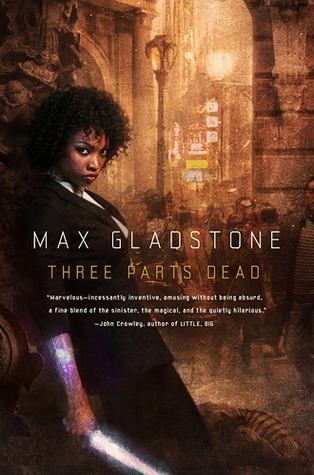
At this point in the year, I was clearly on a roll of fantastic books. I’m on record a few places as saying that I kind of want to kill and eat Max to attempt to absorb his writerly power. (no, not really….. okay, maybe just a small bite…..) I read this, then the next two in his series. And I gave it as a birthday present to a few people. So, so good.
9. Three Parts Dead – Max Gladstone (Craft Sequence #1)
A god has died, and it’s up to Tara, first-year associate in the international necromantic firm of Kelethres, Albrecht, and Ao, to bring Him back to life before His city falls apart.
Her client is Kos, recently deceased fire god of the city of Alt Coulumb. Without Him, the metropolis’s steam generators will shut down, its trains will cease running, and its four million citizens will riot.
Tara’s job: resurrect Kos before chaos sets in. Her only help: Abelard, a chain-smoking priest of the dead god, who’s having an understandable crisis of faith.
When Tara and Abelard discover that Kos was murdered, they have to make a case in Alt Coulumb’s courts—and their quest for the truth endangers their partnership, their lives, and Alt Coulumb’s slim hope of survival.
Set in a phenomenally built world in which justice is a collective force bestowed on a few, craftsmen fly on lightning bolts, and gargoyles can rule cities, Three Parts Dead introduces readers to an ethical landscape in which the line between right and wrong blurs.
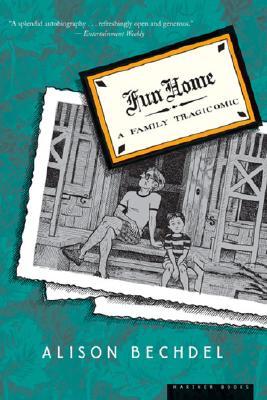
I read about four graphic novels this year, and thoroughly enjoyed all of them, but this was without a doubt the best.
10. Fun Home: A Family Tragicomic – Alison Bechdel
In this groundbreaking, bestselling graphic memoir, Alison Bechdel charts her fraught relationship with her late father. In her hands, personal history becomes a work of amazing subtlety and power, written with controlled force and enlivened with humor, rich literary allusion, and heartbreaking detail.
Distant and exacting, Bruce Bechdel was an English teacher and director of the town funeral home, which Alison and her family referred to as the “Fun Home.” It was not until college that Alison, who had recently come out as a lesbian, discovered that her father was also gay. A few weeks after this revelation, he was dead, leaving a legacy of mystery for his daughter to resolve.

What Django Wexler is doing with this series is very cool, and I was really impressed at the sidestep he managed to do with the second in this series. I really love where things are going here.
11. The Shadow Throne – Django Wexler (The Shadow Campaigns #2)
Anyone can plot a coup or fire an assassin’s bullet. But in a world of muskets and magic, it takes considerably more to seize the throne.
The ailing King of the Vordan lies on his deathbed. When he dies, his daughter, Raesinia Orboan, will become the first Queen Regnant in centuries—and a ripe target for the ambitious men who seek to control her. The most dangerous of these is Duke Orlanko, Minister of Information and master of the secret police. Having meticulously silenced his adversaries through intimidation, imprisonment, and execution, Orlanko is the most feared man in the kingdom.
And he knows an arcane secret that puts Raesinia completely at his mercy.
Exposure would mean ruin, but Raesinia is determined to find a way to break herself—and her country—out of Orlanko’s iron grip. She finds unlikely allies in the returning war hero Janus bet Vhalnich, fresh from a brilliant campaign in the colony of Khandar, and his loyal deputies, Captain Marcus d’Ivoire and Lieutenant Winter Ihernglass.
As Marcus and Winter struggle to find their places in the home they never thought they would see again, they help Janus and Raesinia set in motion events that could free Vordan from Orlanko’s influence—at the price of throwing the nation into chaos. But with the people suffering under the Duke’s tyranny, they intend to protect the kingdom with every power they can command, earthly or otherwise.

12. The Girls of Atomic City: The Untold Story of the Women Who Helped Win World War II – Denise Kiernan
The incredible story of the young women of Oak Ridge, Tennessee, who unwittingly played a crucial role in one of the most significant moments in U.S. history.
The Tennessee town of Oak Ridge was created from scratch in 1942. One of the Manhattan Project’s secret cities, it didn’t appear on any maps until 1949, and yet at the height of World War II it was using more electricity than New York City and was home to more than 75,000 people, many of them young women recruited from small towns across the South. Their jobs were shrouded in mystery, but they were buoyed by a sense of shared purpose, close friendships—and a surplus of handsome scientists and Army men!
But against this vibrant wartime backdrop, a darker story was unfolding. The penalty for talking about their work—even the most innocuous details—was job loss and eviction. One woman was recruited to spy on her coworkers. They all knew something big was happening at Oak Ridge, but few could piece together the true nature of their work until the bomb “Little Boy” was dropped over Hiroshima, Japan, and the secret was out. The shocking revelation: the residents of Oak Ridge were enriching uranium for the atomic bomb.
Though the young women originally believed they would leave Oak Ridge after the war, many met husbands there, made lifelong friends, and still call the seventy-year-old town home. The reverberations from their work there—work they didn’t fully understand at the time—are still being felt today. In The Girls of Atomic City, Denise Kiernan traces the astonishing story of these unsung WWII workers through interviews with dozens of surviving women and other Oak Ridge residents. Like The Immortal Life of Henrietta Lacks, this is history and science made fresh and vibrant—a beautifully told, deeply researched story that unfolds in a suspenseful and exciting way.
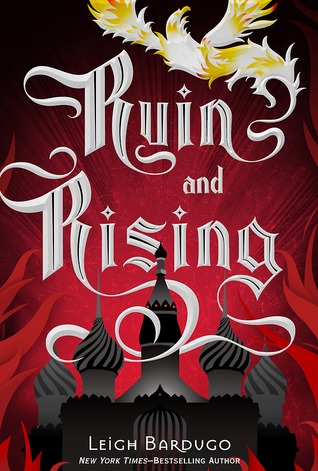
A triumphant conclusion to the trilogy. I love that there are costs to every character and very high stakes. No easy outs in this book.
13. Ruin and Rising – Leigh Bardugo (The Grisha #3)
The capital has fallen.
The Darkling rules Ravka from his shadow throne.
Now the nation’s fate rests with a broken Sun Summoner, a disgraced tracker, and the shattered remnants of a once-great magical army.
Deep in an ancient network of tunnels and caverns, a weakened Alina must submit to the dubious protection of the Apparat and the zealots who worship her as a Saint. Yet her plans lie elsewhere, with the hunt for the elusive firebird and the hope that an outlaw prince still survives.
Alina will have to forge new alliances and put aside old rivalries as she and Mal race to find the last of Morozova’s amplifiers. But as she begins to unravel the Darkling’s secrets, she reveals a past that will forever alter her understanding of the bond they share and the power she wields. The firebird is the one thing that stands between Ravka and destruction—and claiming it could cost Alina the very future she’s fighting for.

Really fascinating, and extremely well laid out.
14. The Epidemic: A Global History of AIDS – Jonathan Engel
From the Castro bathhouses to AZT and the denial of AIDS in South Africa, this sweeping look at AIDS covers the epidemic from all angles and across the world. Engel seamlessly weaves together science, politics, and culture, writing with an even hand—noting the excesses of the more radical edges of the ACT UP movement as well as the conservative religious leaders who thought AIDS victims deserved what they got.
The story of AIDS is one of the most compelling human dramas of our time, both in its profound tragedy and in the extraordinary scientific efforts impelled on its behalf. For gay Americans, it has been the story of the past generation, redefining the community and the community’s sexuality. For the Third World, AIDS has created endless devastation, toppling economies, social structures, and whole villages and regions. And the worst may yet be to come: AIDS is expanding quickly into India, Russia, China, and elsewhere, while still raging insub-Saharan Africa.
A distinguished medical historian, Engel lets his characters speak for themselves. Whether gay activists, government officials, public health professionals, scientists, or frightened parents of schoolchildren, they responded as best they could to tragic happenstance that emerged seemingly from nowhere. There is much drama here, and human weakness and heroism too. Writing with vivid immediacy, Engel allows us to relive the short but tumultuous history of a modern scourge.

Another fantastic book taking on superhero tropes! I love that the daughter of superheroes is… an accountant. And that becomes very important to the plot! Loved it.
15. After The Golden Age – Carrie Vaughn (Golden Age #1)
It’s not easy being a superhero’s daughter….
Carrie Vaughn has captured legions of fans with her wildly popular Kitty Norville novels. Now she uses her extraordinary wit and imagination to tell a sensational new story about superhuman heroes—and the people who have to live with them.
Most people dream of having superheroes for parents, but not Celia West. The only daughter of Captain Olympus and Spark, the world’s greatest champions, she has no powers of her own, and the most exciting thing she’s ever done is win a silver medal in a high school swim meet. Meanwhile, she’s the favorite hostage of every crime boss and supervillain in Comemrce City. She doesn’t have a code name, but if she did, it would probably be Bait Girl, the Captive Wonder.
Rejecting her famous family and its legacy, Celia has worked hard to create a life for herself beyond the shadow of their capes, becoming a skilled forensic accountant. But when her parents’ archenemy, the Destructor, faces justice in the “Trial of the Century,” Celia finds herself sucked back into the more-than-mortal world of Captain Olympus—and forced to confront a secret that she hoped would stay buried forever.

It’s a fun book, mostly because of Unger’s writing and willingness to poke fun at himself, but it does also contain some pretty interesting information and a willingness to wade into politically murky waters.
16. Never Look A Polar Bear In The Eye: A Family Field Trip to the Arctic’s Edge in Search of Adventure, Truth, and Mini-Marshmallows – Zac Unger
“I like to go out for walks, but it’s a little awkward to push the baby stroller and carry a shotgun at the same time.”–housewife from Churchill, Manitoba Yes, welcome to Churchill, Manitoba. Year-round human population: 943. Yet despite the isolation and the searing cold here at the arctic’s edge, visitors from around the globe flock to the town every fall, driven by a single purpose: to see polar bears in the wild.
Churchill is “The Polar Bear Capital of the World,” and for one unforgettable “bear season,” Zac Unger, his wife, and his three children moved from Oakland, California, to make it their temporary home. But they soon discovered that it’s really the polar bears who are at home in Churchill, roaming past the coffee shop on the main drag, peering into garbage cans, languorously scratching their backs against fence posts and front doorways. Where kids in other towns receive admonitions about talking to strangers, Churchill schoolchildren get “Let’s All Be Bear Aware” booklets to bring home. (Lesson number 8: Never explore bad-smelling areas.)
Zac Unger takes readers on a spirited and often wildly funny journey to a place as unique as it is remote, a place where natives, tourists, scientists, conservationists, and the most ferocious predators on the planet converge. In the process he becomes embroiled in the controversy surrounding “polar bear science”–and finds out that some of what we’ve been led to believe about the bears’ imminent extinction may not be quite the case. But mostly what he learns is about human behavior in extreme situations . . . and also why you should never even think of looking a polar bear in the eye.

I read this, plus the next two in the series. I love what Rowland is doing here, particularly with the idea that becoming a zombie has actually given Angel the chance to grow up.
17. My Life as a White Trash Zombie – Diana Rowland (White Trash Zombie #1)
Angel Crawford is a loser.
Living with her alcoholic deadbeat dad in the swamps of southern Louisiana, she’s a high school dropout with a pill habit and a criminal record who’s been fired from more crap jobs than she can count. Now on probation for a felony, it seems that Angel will never pull herself out of the downward spiral her life has taken.
That is, until the day she wakes up in the ER after overdosing on painkillers. Angel remembers being in an horrible car crash, but she doesn’t have a mark on her. To add to the weirdness, she receives an anonymous letter telling her there’s a job waiting for her at the parish morgue—and that it’s an offer she doesn’t dare refuse.
Before she knows it she’s dealing with a huge crush on a certain hunky deputy and a brand new addiction: an overpowering craving for brains. Plus, her morgue is filling up with the victims of a serial killer who decapitates his prey—just when she’s hungriest!
Angel’s going to have to grow up fast if she wants to keep this job and stay in one piece. Because if she doesn’t, she’s dead meat.
Literally.
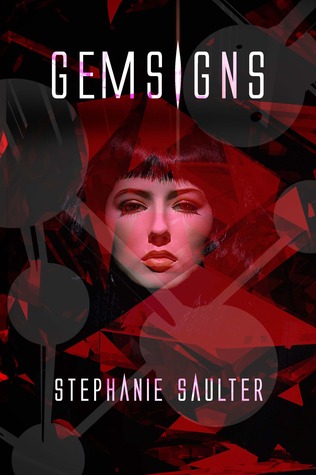
If there’s any genre besides urban fantasy that is at the oversaturation point, it’s dystopia. But I love the way that Saulter is playing with the ideas of humanity, ownership, and corporate overreach here. Definitely worth checking out, even if you feel done with dystopia.
18. Gemsigns – Stephanie Saulter (Evolution #1)
Humanity stands on the brink. Again.
Surviving the Syndrome meant genetically modifying almost every person on the planet. But norms and gems are different. Gems may have the superpowers that once made them valuable commodities, but they also have more than their share of the disabled, the violent and the psychotic.
After a century of servitude, freedom has come at last for the gems, and not everyone’s happy about it. The gemtechs want to turn them back into property. The godgangs want them dead. The norm majority is scared and suspicious, and doesn’t know what it wants.
Eli Walker is the scientist charged with deciding whether gems are truly human, and as extremists on both sides raise the stakes, the conflict descends into violence. He’s running out of time, and with advanced prototypes on the loose, not everyone is who or what they seem. Torn between the intrigues of ruthless executive Zavcka Klist and brilliant, badly deformed gem leader Aryel Morningstar, Eli finds himself searching for a truth that might stop a war.
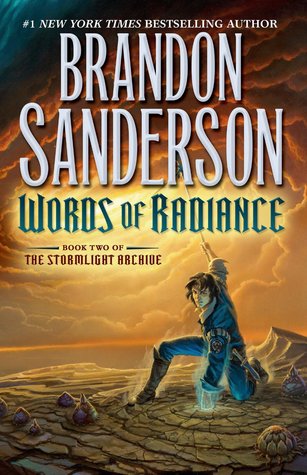
It’s a great book, but here’s the real thing — this thing is massive. Like, it’s actually *heavy* in your hands while you’re reading it. I’m not sure that I’d be able to take this on a plane — they’d probably view it as a potential weapon and confiscate it.
19. Words of Radiance – Brandon Sanderson (Stormlight Archive #2)
Having met the challenge of a posthumous collaboration with the great Robert Jordan to complete his classic, bestselling fantasy series The Wheel of Time® with three #1 New York Times bestsellers in a row, Brandon Sanderson is at last free to return to the decade-spanning task of creating his own multi-volume epic, one that he hopes will make a comparable mark on the field. That epic is The Stormlight Archive and it began in 2010 with Tor’s longest, most elaborately embellished novel ever, The Way of Kings.
In that first volume, we were introduced to the remarkable world of Roshar, a world both alien and magical, where gigantic hurricane-like storms scour the surface every few days and life has adapted accordingly. Roshar is shared by humans and the enigmatic, humanoid Parshendi, with whom they are at war. Among those caught up in the conflict are Brightlord Dalinar Kholin, who leads the human armies; his sister Jasnah, a renowned scholar; her student Shallan, a brilliant but troubled young woman; and Kaladin, a military slave who, by the book’s end, had become the first magically endowed Knight Radiant in centuries.
In Words of Radiance their intertwined stories will continue and, as Sanderson fans have come to expect, develop in unexpected, wonderfully surprising directions. The war with the Parshendi will move into a new, dangerous phase, as Dalinar leads the human armies deep into the heart of the Shattered Plains in a bold attempt to finally end it. Shallan will come along, hoping to find the legendary, perhaps mythical, city of Urithuru, which Jasnah believes holds a secret vital to mankind’s survival on Roshar. The Parshendi take a dangerous step to strengthen themselves for the human challenge, risking the return of the fearsome Voidbringers of old. To deal with it all, Kaladin must learn to how to fulfill his new role as leader of the restored Knights Radiant, while mastering the powers of a Windrunner.
With this second book, the Stormlight Archive grows even more richly immersive and compelling. Sanderson’s fans, old and new, are likely to lift it at least as high on the bestseller lists as its predecessor.
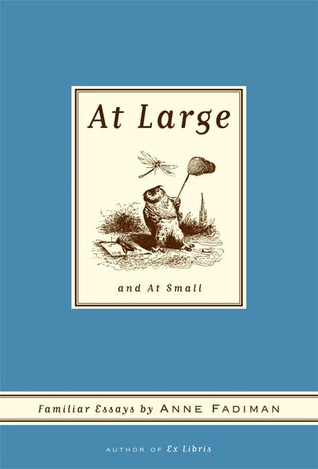
What a lovely surprise this book was. I picked it up because I needed to teach the personal essay, but I read the whole thing because I just love the way that Fadiman uses words, personal experience, and research. Perfection.
20. At Large and at Small: Familiar Essays – Anne Fadiman
In At Large and At Small, Anne Fadiman returns to one of her favorite genres, the familiar essay—a beloved and hallowed literary tradition recognized for both its intellectual breadth and its miniaturist focus on everyday experiences. With the combination of humor and erudition that has distinguished her as one of our finest essayists, Fadiman draws us into twelve of her personal obsessions: from her slightly sinister childhood enthusiasm for catching butterflies to her monumental crush on Charles Lamb, from her wistfulness for the days of letter-writing to the challenges and rewards of moving from the city to the country.
Many of these essays were composed “under the influence” of the subject at hand. Fadiman ingests a shocking amount of ice cream and divulges her passion for Häagen-Dazs Chocolate Chocolate Chip and her brother’s homemade Liquid Nitrogen Kahlúa Coffee (recipe included); she sustains a terrific caffeine buzz while recounting Balzac’s coffee addiction; and she stays up till dawn to write about being a night owl, examining the rhythms of our circadian clocks and sharing such insomnia cures as her father’s nocturnal word games and Lewis Carroll’s mathematical puzzles. At Large and At Small is a brilliant and delightful collection of essays that harkens a revival of a long-cherished genre.
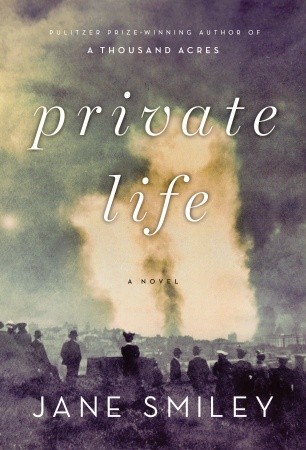
One of those books that I liked, but I doubt I’ll ever re-read. The main character made me so upset and frustrated on her behalf — but in a good, thoughtful way. A fascinating book about a life wasted.
21. Private Life – Jane Smiley
A riveting new novel from the Pulitzer Prize–winner that traverses the intimate landscape of one woman’s life, from the 1880s to World War II.
Margaret Mayfield is nearly an old maid at twenty-seven in post–Civil War Missouri when she marries Captain Andrew Jackson Jefferson Early. He’s the most famous man their small town has ever produced: a naval officer and a brilliant astronomer—a genius who, according to the local paper, has changed the universe. Margaret’s mother calls the match “a piece of luck.”
Margaret is a good girl who has been raised to marry, yet Andrew confounds her expectations from the moment their train leaves for his naval base in faraway California. Soon she comes to understand that his devotion to science leaves precious little room for anything, or anyone, else. When personal tragedies strike and when national crises envelop the country, Margaret stands by her husband. But as World War II approaches, Andrew’s obsessions take a different, darker turn, and Margaret is forced to reconsider the life she has so carefully constructed.
Private Life is a beautiful evocation of a woman’s inner world: of the little girl within the hopeful bride, of the young woman filled with yearning, and of the faithful wife who comes to harbor a dangerous secret. But it is also a heartbreaking portrait of marriage and the mysteries that endure even in lives lived side by side; a wondrously evocative historical panorama; and, above all, a masterly, unforgettable novel from one of our finest storytellers.

Hilarious. Dark, dark humor, with no concern for the weak. I loved every minute that I spent reading this.
22. This Is Where I Leave You – Jonathan Tropper
The death of Judd Foxman’s father marks the first time that the entire Foxman family—including Judd’s mother, brothers, and sister—have been together in years. Conspicuously absent: Judd’s wife, Jen, whose fourteen-month affair with Judd’s radio-shock-jock boss has recently become painfully public.
Simultaneously mourning the death of his father and the demise of his marriage, Judd joins the rest of the Foxmans as they reluctantly submit to their patriarch’s dying request: to spend the seven days following the funeral together. In the same house. Like a family.
As the week quickly spins out of control, longstanding grudges resurface, secrets are revealed, and old passions reawakened. For Judd, it’s a weeklong attempt to make sense of the mess his life has become while trying in vain not to get sucked into the regressive battles of his madly dysfunctional family. All of which would be hard enough without the bomb Jen dropped the day Judd’s father died: She’s pregnant.
This Is Where I Leave You is Jonathan Tropper’s most accomplished work to date, a riotously funny, emotionally raw novel about love, marriage, divorce, family, and the ties that bind—whether we like it or not.
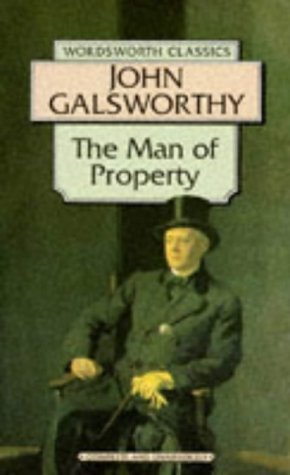
The second book that I encountered this year thanks to BBC! The Forsyte Saga won a Pulitzer — and it really does hold up when you read this. It’s almost entirely out of print in the US, so you’ll probably have to get it used, but I got my hands on the first third of it (The Man of Property), and I can’t wait to read the rest.
23. The Man of Property – John Galsworthy
The most prized item in Soames Forsyte’s collection of beautiful things is his wife, the enigmatic Irene. But when she falls in love with Bosinney, a penniless architect who utterly rejects the Forsyte values, their affair touches off a series of events which can only end in disgrace and disaster.
John Galsworthy tackles his theme of the demise of the upper-middle classes with irony and compassion.

At a certain point in this book, I actually did start wondering if anyone was going to be left alive at the end.
McIntosh is insanely good.
24. Defenders – Will McIntosh
Our Darkest Hour.
Our Only Hope.
The invaders came to claim earth as their own, overwhelming us with superior weapons and the ability to read our minds like open books.
Our only chance for survival was to engineer a new race of perfect soldiers to combat them. Seventeen feet tall, knowing and loving nothing but war, their minds closed to the aliens.
But these saviors could never be our servants. And what is done cannot be undone.

Butler does not fuck around. It’s hard to imagine a darker book than Parable of the Sower, but Butler makes it happen.
25. Parable of the Talents – Octavia E. Butler (Earthseed #2)
This Nebula Award-winning sequel to “Parable of the Sower” continues the story of Lauren Olamina in socially and economically depressed California in the 2030s. Convinced that her community should colonize the stars, Lauren and her followers make preparations. But the collapse of society and rise of fanatics result in Lauren’s followers being enslaved, and her daughter stolen from her. Now, Lauren must fight back to save the new world order.

Sweet heavens did I need this after reading Parable of the Talents. It’s not that it’s light — Moriarty is really digging around at some of the messier areas of history, but there’s definitely a more optimistic outlook. People grow and change in The Chaperone — and for the better. It’s lovely.
26. The Chaperone – Laura Moriarty
Only a few years before becoming a famous silent-film star and an icon of her generation, a fifteen-year-old Louise Brooks leaves Wichita, Kansas, to study with the prestigious Denishawn School of Dancing in New York. Much to her annoyance, she is accompanied by a thirty-six-year-old chaperone, who is neither mother nor friend. Cora Carlisle, a complicated but traditional woman with her own reasons for making the trip, has no idea what she’s in for. Young Louise, already stunningly beautiful and sporting her famous black bob with blunt bangs, is known for her arrogance and her lack of respect for convention. Ultimately, the five weeks they spend together will transform their lives forever.
For Cora, the city holds the promise of discovery that might answer the question at the core of her being, and even as she does her best to watch over Louise in this strange and bustling place she embarks on a mission of her own. And while what she finds isn’t what she anticipated, she is liberated in a way she could not have imagined. Over the course of Cora’s relationship with Louise, her eyes are opened to the promise of the twentieth century and a new understanding of the possibilities for being fully alive.
Drawing on the rich history of the 1920s,’30s, and beyond—from the orphan trains to Prohibition, flappers, and the onset of the Great Depression to the burgeoning movement for equal rights and new opportunities for women—Laura Moriarty’s The Chaperone illustrates how rapidly everything, from fashion and hemlines to values and attitudes, was changing at this time and what a vast difference it all made for Louise Brooks, Cora Carlisle, and others like them.
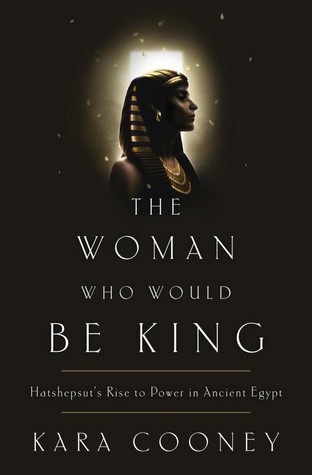
Excellent, fascinating, of interest to any armchair historian or gender studies enthusiast, but I cannot overstate this enough:
The ancient Egyptians were very serious about their incest. Brother-sister, father-daughter, it all happened! Also, divine masturbation was a thing. A thing that was apparently necessary for the universe to exist.
I really loved this book.
27. The Woman Who Would Be King: Hatshepsut’s Rise to Power in Ancient Egypt — Kara Cooney
An engrossing biography of the longest-reigning female pharaoh in Ancient Egypt and the story of her audacious rise to power in a man’s world.
Hatshepsut, the daughter of a general who took Egypt’s throne without status as a king’s son and a mother with ties to the previous dynasty, was born into a privileged position of the royal household. Married to her brother, she was expected to bear the sons who would legitimize the reign of her father’s family. Her failure to produce a male heir was ultimately the twist of fate that paved the way for her inconceivable rule as a cross-dressing king. At just twenty, Hatshepsut ascended to the rank of king in an elaborate coronation ceremony that set the tone for her spectacular twenty-two year reign as co-regent with Thutmose III, the infant king whose mother Hatshepsut out-maneuvered for a seat on the throne. Hatshepsut was a master strategist, cloaking her political power plays with the veil of piety and sexual expression. Just as women today face obstacles from a society that equates authority with masculinity, Hatshepsut had to shrewdly operate the levers of a patriarchal system to emerge as Egypt’s second female pharaoh.
Hatshepsut had successfully negotiated a path from the royal nursery to the very pinnacle of authority, and her reign saw one of Ancient Egypt’s most prolific building periods. Scholars have long speculated as to why her images were destroyed within a few decades of her death, all but erasing evidence of her rule. Constructing a rich narrative history using the artifacts that remain, noted Egyptologist Kara Cooney offers a remarkable interpretation of how Hatshepsut rapidly but methodically consolidated power—and why she fell from public favor just as quickly. The Woman Who Would Be King traces the unconventional life of an almost-forgotten pharaoh and explores our complicated reactions to women in power.
TAINTED BLOOD is released tomorrow!
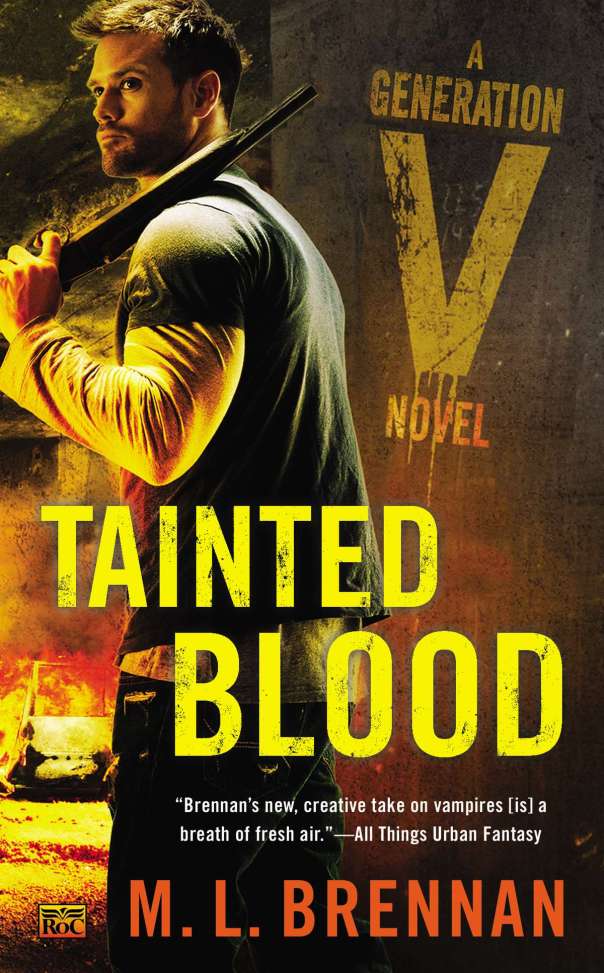
Closer. Closer on my prettiness.
Special nerd points to all those who got that particular MST3K reference. I salute you.
Holy shit, everyone, Tainted Blood will be released tomorrow! First of all — I’m 24 hours away from being the author of a trilogy, so consider that ACHIEVEMENT UNLOCKED. Secondly — you guys are 24 hours away from 306 pages filled with violence, nerd references, kitsune fabulousness, Finnish were-bears, and my continued efforts to make my vampires as fundamentally icky as possible.
To everyone who hit the preorder button at some point over the last few months, THANK YOU!!
To everyone planning to hit bookstores tomorrow to get their greedy hands on this book, THANK YOU!!
To everyone who has pestered their local librarian into buying a copy or ordering it through interlibrary loan, THANK YOU!!
To everyone who intends to illegally download a copy, seriously, man, you’re killing me here. Please report internet piracy to the publishers.
The publishers pay incredibly close attention to the first week of sales, both physical and e-book. It was the strong sales numbers on Iron Night that convinced the publisher to roll the dice and offer me a contract for the fourth book in the series. You guys, with your amazing support of my series, are the reason that when you finish the last page of Tainted Blood, you can know that another book in the American Vampire series will be on shelves in August 2015 — and it’s thanks to you.
A few fun things to fill those last hours before the book hits the shelves and the kindles:
A review of Tainted Blood, plus a giveaway of a signed copy from one of my favorite blogs, The Bibliosanctum!
A really fun interview that I did with Rob Bedford over at SFFWorld — if you’ve ever wondered why I decided to have Fort beaten up by Bruins fans back in the first book, the answer is here!
And, finally, I’ll be doing an AMA over at the Reddit r/Fantasy board on Thursday, so come over and ask me anything!
I can’t wait to hear what everyone thinks of Tainted Blood, and I’m so very excited that people are finally going to get a chance to read it. Thank you again!
Nine days until Tainted Blood!

Just nine more days until you can own all three!
That crept up on me.
Want a sneak peek snippet at Tainted Blood? Check out the Sunday Snippet at That’s What I’m Talking About — they’re doing a double feature of Iron Night and Tainted Blood! Plus, you can enter a giveaway for a signed copy of Iron Night. Check it out, and don’t forget to pre-order Tainted Blood wherever fine books are sold!
Teresa Frohock just told me about Storify! Hurrah!
That title kind of covered everything.
15 days until Tainted Blood is published. 27 days until Book 4 manuscript is due.
*typidy typidy typidy*
Tainted Blood
Soon, precious. Sooon.
Forty-three days until Tainted Blood hits bookshelves, and it just got a fabulous review from Publishers Weekly! Go check it out!
Notable quotes include:
Rapid-fire prose and intimate characterization infuse stock mythic figures with pertinence and attitude. Fortitude is an enthralling good boy going bad, struggling to merge monstrous powers with humility and wisdom.
And:
Self-referential comedy and operatic tragedy make sexy bedmates, enhanced by lush atmosphere and sharp dialogue. Brennan’s smart, sassy, and seductive vampire mythos injects fresh blood into a lethargic subgenre.
Oh, and for those of you who frequent Amazon, the pre-order price on TB is $5.78 for paperback, $5.99 for ebook! How can you resist that?
You can no more resist those low prices than you can resist the adorable golden snub nose monkey!
 M. L. Brennan