Category Archives: Publication
Self-Publication
It’s now just under four months until Generation V will be published. (In case I was too subtle on that: May 7! Pre-order is available at many fine online establishments!) Here’s something that’s kind of funny about being almost-published – you find out just how many people around you would like to publish a book. From my mailman’s niece to the boss of a friend of mine, when the people you know start saying “Hey, my friend is about to get published,” suddenly you become someone people would like to talk to.
This is very different from the response to “Hey, my friend is writing a book,” because then everyone is just coming up with reasons why they really really don’t want to read a draft of it. (For the record – I don’t blame them. Two friends read my drafts. I do not envy them this – they have to tell me what isn’t working in harsh enough terms that I put on adult-sized pants and deal with the issue, yet at the same time validate me for the six months I just spent wrapped up in creating this manuscript. It’s stressful.)
But one of my friends knows someone who has written a manuscript, and who wanted some advice on publication. She’d been talking with someone who self-publishes, and his advice to her was geared toward that line of publication. He even was nice enough to suggest who she could employ to edit the book and design a cover.
Here was her question, which I’m going to post since I have a feeling that it’s a question that a lot of people looking at a freshly completed manuscript end up asking themselves:
Since I’m new to this scene, I wanted to get some more information on the benefits of self-publishing vs. trying to get a literary agent which I know can be very difficult. Any words of wisdom? Do you mind me asking how you got started?
I’ve written about my path to publication before, but I never really addressed my own decision not to explore self-publication. Plus I spent about two hours writing my reply email, so I’ve decided to put this up. I know that there are a lot of strong feelings both for and against self-publication, and that this topic has a lot of nuances to it, but here are my thoughts on the issue, and the advice that I would offer to people considering it for themselves.
I’m clipping the first part of my letter, which was about stuff more specific to her, but I’m posting the rest as I sent it to her.
I think this goes with the general gist of my feelings toward publishing. The odds may be long, but I think it’s worth trying for. Run, hippo, run!
Firstly, I’ll explain my own position about self-publishing — I know that it has gained much more credibility in the last few years, and that it is no longer limited to the standard “vanity press” — there are also a lot of examples lately of people who didn’t have luck getting something published through traditional means, published themselves, and found success.
That being said, when I was working toward getting published (and it did take me a few years), self-publishing was never something I even thought about trying. Was getting an agent hard? Yes, it was. I cold-queried over sixty agents before I found mine — some of them never responded, many sent me form rejections, several read parts of my manuscript and thought about taking me on, and a few even came very close to taking me.
And getting an agent is no easy pass to publication either, since then your agent tries to find your book a publisher, which is just as difficult. My book is going to be published in May — it is not the book that I got my agent with. The book my agent originally represented (the book I spent three years writing, trying to get an agent with, rewriting with feedback I’d gotten, and then finally got her with) never sold, despite my agent’s best efforts. So I sat down and wrote a completely new book. And it also took my agent about seven months to find this book a home, and it was rejected by enough publishing houses that I’d actually just sat down to start writing a third book when my agent gave me the call that we’d gotten a nibble of interest.
But during that time period (which stretched about four years from the first time I sent a query to an agent to when I signed a contract to sell my book) I never thought that self-publishing was a better option. And I’m even more confident about that decision now. I’ll walk through that process again:
I wrote a book that I loved and that I was extremely proud of. I’d already gone through two major edits, and it looked good. If I was self-publishing, I could’ve taken that book (which I was happy about) and jumped immediately to the parts like hiring someone to edit, hiring someone to do a cover, and trying to do self-promotion.
It wouldn’t have been the best thing I could’ve written. The agents who turned down my manuscript gave me a lot of very valuable criticism. I probably sent it out to forty agents before I decided that the manuscript needed to be overhauled. So I stopped submitting and took six months and reworked the book again. It was hard, but the book was a lot better when I was done. I sent it out to all the agents who had responded to my original query. None took the book on, so I compiled a new list of agents and started sending out. That was when I found my agent, Colleen Mohyde.
That’s the thing — one query or a thousand queries: all you need is one person to say yes. If you have a good, solidly written book, then someone will say yes. Also, the thing about an agent is that she doesn’t get paid until you do — it’s in her best interests to make sure that she gets you the best possible deal on the best possible terms. Short of one-shot celebrity memoirs, every agent is working to build an author’s career. Colleen worked with me for two years before she got a paycheck out of it.
So Colleen then took my book and sent it out — starting with the top publishing companies, then working her way slowly down the list to small independent presses. This took one very long year, with a lot of rejections, a few nibbles of interest, but mostly rejections. It became really clear that the book wasn’t selling — so during my summer break from teaching, I sat down and wrote another book. I gave it to Colleen, and she began the same process that she had with the first, complete with a number of rejections — except this time it sold, and it sold to [Roc]. Definitely a big deal. And, again — it didn’t matter how many people ultimately said no, as long as one person said yes.
So I sold a manuscript that was 74,000 words (and here is where Colleen more than earned her 15% — on the contract negotiation), and a book that I loved, my agent loved, and my editor loved.
What is getting published is 85,000 words. My editor and I went back and forth on three through edits — one largely structural, and two more precise line-edits. I cut some things, adjusted some things, and ended up fleshing out and adding a lot more. I can say without a doubt — everywhere my editor touched the manuscript, it got better. She questioned things and challenged several others, and it pushed me to improve what I’d thought was good and make it better. I wasn’t employing my editor — we were working together on a project that both of us believed strongly in, and that we were both trying to make as good as it could be. Because she also had a bit of a position of authority over me, I never had the out of saying, “Hey, I just want to leave it like that” — if I didn’t agree with an edit, I had to work elsewhere to correct the issue she was noting. She was able to do her job, and that was pushing me to write as well as I could — and beyond where I would’ve left things on my own.
Once my editor was satisfied with the result of our labor, it was passed over to a separate copy-editor. This person had no emotional stake in the manuscript like my editor or I did, and a month later I was presented with his notes. These were mainly focused on grammar and continuity (things that I’d already worked on with the editor, but now these were even more precise), and I worked on those and returned the manuscript. It then went to a typesetter, who put together an uncorrected proof. These pages were sent to me and to a completely new proofreader to make sure that any last grammar issues or typos were caught — and this is a fact: even after it had been through this many edits and hands, I found 10. I don’t know yet if my proofreader found any others.
After this round the book will be adjusted, rebound, and advance reader’s copies will be sent out to try to solicit some more good reviews. When I first finished the initial edits, my editor sent the manuscript to a bunch of other (bestselling) authors to try to get blurbs for the front cover — I got two from bestselling authors in the field. If I’d just sent an e-book to them, I have no doubts that they never would’ve read it.
Because I’m a new author, not much money (comparatively) will be spent on publicizing my book — that’s just a fact of the publishing world today. So I’ve been setting up a website, blogging, trying to bring my book to the attention of people who could help publicize it — all the stuff that any writer will do as self-promotion. But in addition to what I am doing, my agent is doing everything she can to promote it, and so is my editor, and there’s a general publicity department over at Penguin that includes information about my book in their press releases. Whenever I find a website or blog that devotes itself to reviewing books, I fill out a form on their site to request that they review my book when it comes out — and the truth is that many of them specify on the form that they aren’t interested in self-published books.
The cover of my book is amazing — my editor asked me to send her a list of covers I’d seen that I liked so that she could get a sense of what my tastes were, but she also let me know at the start that they would be putting together a cover to sell the book, not to please me. A team worked on it, with my editor very involved, and when they showed me the result I was blown away. Was it what I’d pictured? Nope. It’s not what I would’ve designed either. But I’m not a graphic designer — I’m a writer. Not having to worry about the cover, or pick someone to do it, meant that I had more time to write. Plus, the cover that I was presented was something that a whole group had worked on.
This is running crazy long, so let me ultimately sum this up — if you’ve written a book that you are proud of, and that you worked hard on, I think you owe it to yourself to try and get it published through the biggest platform available to you to showcase this work. Good books are self-published — I’m not denying that. But so are a whole lot of bad books that are poorly edited and have very cheap cover design. And even if your book is amazing, and you employ a great editor who will be honest with you about every change that needs to be made and will go back and forth with you through as many edits as necessary, and even if you get a great cover artist who designs an amazing and professional cover (and that can absolutely happen!), here’s the thing:
1) You are putting a very real financial investment into this book beyond what was even required to write it — the editor, the cover artist, whether you then also employ a copy-editor and then a final proof-reader, plus the publication itself. Will it be faster than if you went traditional publishing? Yes. You will also rest assured that you will see your name on the cover of a book, which is a promise no one can make to you if you pursue traditional publication. But I never wrote a single check or handed out a dollar to anyone in that long process I described to you — it was long and hard, but when money came, it came to me, not from me. My agent and my editor are invested in the book — that’s where their payout will come from — not from whether I’ll write them another check.
2) There will be an asterisk next to your book if you self-publish. This isn’t a scarlet letter, but it means that the strength of your writing will have to overcome assumptions. Even as self-publishing is getting more and more acceptable, and the barrier of brick and mortar bookstores becomes less important in sales, this is a fact that will very seriously remain, and for this reason:
No matter how much you put into this work, and how good you *know* that it is, this fact will remain: a five-year-old can self-publish. All it takes is someone standing next to them with a working checkbook, and their book will sit right beside yours. Publishers deal with the slush pile — these are unagented manuscripts that are sent in by those dreaming of publication. Famous books have been pulled from the slush pile. Less famous are the books by five-year-olds that get dropped into the recycling bin. But self-publishing is the new slush pile — and forcing your book to the top of that so that people can read it and be inspired by it is frankly a full-time job in self-promotion. You don’t have the stamp of approval that comes with traditional publishing — that this passed through many gates, and many rounds of approval, and what is here is professional and readable. (notice that I don’t say “good” — no one can truly guarantee that. but the rest does matter)
3) The option to self-publish will still be there next year, and the year after it. I know what it feels like to so viscerally want to see your work in print — but will it hurt you to say to yourself, “If I’m not in a publishing contract in ___ years, then I’ll look into self-publishing.” Unless your book is about how the Mayan calendar was originally miscalculated and the world is actually going to end on New Year’s Day 2014, then it probably won’t. And don’t you owe it to the work you’ve put into the book to try?
Anyway, I’m sorry that this took so long and became so much of a soap-box sermon, but I hope that it helps you make the decision that works for you, and please don’t hesitate to email me any questions!
— That’s the end of the letter. So I’m wondering, what do the rest of you think? Am I giving good advice or bad? If you’ve self-published, can you add your viewpoint to offset mine?
And if you read that and have any questions, just drop them in the comments field and I’ll be happy to answer them!
I leave you with this:

I remember this episode of Batman. It is still more believable than the time that a dolphin bravely threw itself between the BatBoat and a missile to protect Batman and Robin.
Copyedits and Page Proofs
So a while back, I received notes from my copyeditor about the Generation V manuscript (publication date May 7 – preorder at Amazon, Barnes & Noble, or wherever you like to buy your literature!). Having never had the pleasure of working with a copyeditor before, I kept in mind the wise words emailed to me on the topic by my industry insider buddy, Karen:
As for the copyeditor… Copyeditors exist for one reason: to make you realize that you don’t know the English language like you probably should.
More seriously, they clean up the manuscript so all subjects and their verbs agree and so all pronouns have a clearly identified antecedent. They prune cliches, unmix metaphors, and go on “which” hunts (ie, use “that” with restrictive clauses, “which” with non-restrictive clauses — curiously enough, the Brits habitually ignore this “rule”). Moreover, they edit your manuscript to adhere to “house style”. (Do they use “cancellation” or “cancelation”? Do they use serial commas? etc.)
That actually was really useful advice. Now, I’ve never considered myself too much of a stickler about grammar (grammar sticklers reading this blog will definitely agree) despite the fact that I teach basic grammar to college students multiple times per year. But if you ever have the experience of having your manuscript copyedited, here’s my advice: Don’t get too worked up. This is a person doing their job. One that in the end will make the book better.
A few things were very interesting to learn about – firstly, my copyeditor clearly researched a few things a bit further than I did. Now, I did a bit of research when it came to arming my hero (ie: I asked questions of friends who grew up red states), but apparently I had a few gaps, now much better filled in as a result.
I’ll be honest – when you type some search terms into Google, you end up at some really weird websites, and after a while you start worrying about ending up on government watch lists.
There were also a lot of smaller areas that I’d never even considered – for example, apparently “Nereids” is a proper noun. Who knew? My copyeditor, that’s who. Also, apparently Styrofoam is actually a brand name, whereas I tend to use it as a generic term for any white squishy material used in take-out containers. Areas like that were duly corrected.

Styrofoam: the Jacuzi of the take-out container
Areas that also came up – my habit of using “further” and “farther” completely interchangeably. I also managed to create an incredible tangle by mixing tenses in some contexts, which was very irritating to try and unsnarl, and had a major impact on the work I’m currently doing on Book Two. Namely – I do not want to have make those corrections again. (note: I probably will have to make those corrections again)
But, very excitingly, the manuscript moved through the copyedit phase, and now I have something extremely awesome on my desk. What, you ask?
My page proofs just arrived!
My page proofs are the emotional equivalent of this photo, in that they will never stop being awesome.
Generation V has existed for a very long time as a series of Microsoft Word documents, either on my computer or emailed between me and my editor. For the first time, I can actually see what it’s going to look like as a book – it’s a very heady moment. It’s a big milestone on the way to getting published – each step makes it feel that much more real.
It sounds a little silly to say – after all, I’ve had a signed contract with Roc for months now, editors have put in a lot of work on this book, and I even have a cover now, but it reminds me of what it was like to buy a house. There were a lot of very exciting moments in the process, but until that last morning in an attorney’s office when my husband and I signed about 50,000 documents, something could still have happened to stop the process, and so buying the house didn’t feel entirely “real.” A zombie-pocolypse could strike New York city, decimating the publishing industry and leaving us in a world where contracts are no longer honored because we are too busy fighting to survive. (True fact: When I read on my editor’s Twitter feed that she was home sick with a cold, my first thought was, “Oh my God, if she dies of the flu, what happens to the book?” Then I immediately felt shame thinking that.)

“But if she did die of the flu—“ “No! You demean us both with your thoughts!”
Publication on Generation V now just over four months away, and I’m continuing to chip away at the manuscript for Book Two. That’s pretty much taking up my life right now – I’m hoping to finish the first draft of the manuscript by the end of January so that I can even out my schedule a bit.
Lacking a great way to finish this entry, I’ll do it with this:

Cover art!
My editor sent me the cover art for Generation V (out in May 2013)! Check this out!

C’mon, look at that cover. You want to read this book, don’t you? It’s gritty! And cynical!
I am really so thrilled about this cover. My editor really surprised me a few months ago by asking me to put together some information about my preferences for cover art – artists I liked, other covers I could imagine fitting in with the tone of Generation V, and physical descriptions of the characters. I got to see an earlier version of this cover about a month ago, but it was very hush-hush until it got final approval.
But, honestly, it fulfilled all of my major hopes for the cover, in that it:
1: Looks really cool and badass. As my main example of how this could’ve gone wrong, gentle reader, I turn your attention to the awesome book Ariel by Steven R. Boyett:

This is what a badass cover looks like.
Look at that cover. It’s dark, the dude looks all kickass, weaponry is involved, and could New York City look any more apocalyptic? No, short of having Mothra making an entrance on stage left, it could not. This book is the literary version of a guy in a leather jacket leaning against a high school hallway wall and smoking a cigarette. You look at that cover in a bookstore and have to immediately give in to peer pressure and read this book.
Now, here’s what the original cover looked like:

Let us charitably refer to this as “less badass.”
Can you see the difference? For one thing, the guy on that cover looks like he’s about to burst into Disney-levels of song. And while everything on that cover is technically accurate to the book (including the *sigh* happy little dolphins) it’s not entirely stylistically appropriate. For one thing, that unicorn curses like a sailor.
It also fulfilled my cover desires in that it also:
2: Is not something that would make me embarrassed. Namely, it does not feature eroticized shirtlessness. Or the heaving of the bosoms. (not that there isn’t nudity in the book, because there totally is — I’m all about the fan service) An example of this would be like is what happened with the Laurell K. Hamilton Anita Blake books.
Here’s the original cover of the first book in that series, Guilty Pleasures:

Kind of cool, right? Has the heroine holding a gun, apparently threatening a building, plus the head of a dude with fangs. Kind of covers the main themes of the book.
Now here’s what the re-issued cover looks like:

That’s a cover that has implied theme music. And that music goes bow-chica-bow-wow for five minutes before the moaning gets too loud to hear it anymore.
So, that was pretty cool. Also cool? Well-published authors who were sent advanced copies of Generation V have said nice things about it! You can see the Karen Chance comment on the front – here’s the actual full text on it:
“I loved M. L. Brennan’s GENERATION V. Engrossing and endearingly quirky, with a creative and original vampire mythos, it’s a treat for any urban fantasy lover!” –Karen Chance
Suddenly I’m a bit more impressive, aren’t I? Well, brace yourselves, because here’s another one!
“Full of vivid characters and terrific world building, GENERATION V is a fun, fast-paced romp of a story that kept me glued to the pages to the very last word. Loved it! Bravo, M. L. Brennan, bravo!” — National bestselling author Devon Monk
I’m trying to figure out a faux-humble way to put these quotes on my Christmas cards this year. Which also leads me to the interesting etiquette quandary of, does one send thank-yous for good reviews? I was always told that you can’t say “thank you” for a good review, but that you should say “I’m glad you liked it” – apparently that removes any potential whiff of nepotism in action or something. But I’m also not sure how to phrase that email – “We’ve never met, but you liked my book, so thank you. PS: Loved Dead Iron. XOXO – M. L. Brennan”
Hm. Has possibilities.
In last news of the awesome, Generation V now has its own pages on Amazon.com and Barnes & Noble! You can even pre-order it! (hint.. hint…)
Generation V and the editing process
Okay, that was a long break between posts. What happened was that my day job of teaching college freshmen started back up again, and I’ve been trying to juggle time between teaching 18-year-olds how to use apostrophes correctly and writing Book Two. That meant that this blog unfortunately fell a bit by the wayside. To my possibly half-dozen readers, mea culpa!
Of course, the hope is that someday, after Generation V is published (May 2013, ya’ll – mark calendars accordingly), there will be hordes of people visiting this website! And to you, readers of the future, I apologize. I know that you hang on my every word, and that this blog is a priceless repository of my musing back in the days before I hit it big and (presumably) totally sold out. Future men and women, perusing this on the e-readers that have been surgically implanted in your arms, forgive me.

Reader of the future, you will get why this is really funny in the context of Generation V. Reader of the present: Fortitude Scott likes Doctor Who and works in a coffee shop. Caffeinate!
But in addition to trying to convince college freshmen that it really is the time in their lives to learn how to use a comma correctly, the Generation V manuscript has gone through a major step in the editing process! Woo!
A few interesting numbers – when the fine folks at Roc bought my manuscript, it was 74,600 words. That’s a little on the light side – around 260 pages of a finished manuscript. The book was finished – there weren’t cliffhangers to it, but my editor gave me a few overall comments and notes that were really helpful. I spent a little under a month working on the manuscript after we talked, and when I sent it to her, it was now 84,000 words long. That was a gain of about 10,000 words.
And the amazing thing was that the main story never actually changed.
What changed during the process was actually mostly small things. Things I’d mentioned about my version of vampire nature and physiology were clarified. A few scenes that were already present got longer and more complicated. The motivations and pressures that lead my main character, Fortitude, to go from disillusioned coffee-slinger to badass hero were clarified. I added a few scenes as well that helped the overall feel of the book – there’s a stopover at a pizza place as well as an ammunition store that were completely new. It was a really useful process, and while it took a fair amount of work, I really enjoyed it.
There’s a lot of discussion about the benefit of graduate writing programs. I won’t get into that much on this blog, but I think there are a lot of very valid concerns about these programs – particularly in terms of how much money is being spent by students to get a degree that might have a very minor earning power. But one of the things that I will always say was worthwhile about the years I spent in that program was how much it taught me to be flexible as a writer. I might think I’ve just crafted an incredible work of genius, but if I ask someone for their feedback and they point out a big damn problem, I need to stop and address it. It might be the last thing in the world I want to look at, and sometimes the cuts and changes might be painful to make, but it has to be done.
I had a friend when I was an undergraduate who had written a high fantasy book. She asked me to read it, and I did. Problem was, I stopped reading about sixty pages in and gave the manuscript back to her. And I told her very honestly when I did that I just physically couldn’t read any more, because I hated her hero so damn much that everything after the first ten pages had been a struggle to get through, and I didn’t think that she had meant to create a hero quite that flawed. In fact, looking at the way she had described him, I had the impression that she’d tried to create a perfect hero.
I’m sure that I don’t need to say that she was pretty unhappy with my feedback. She also didn’t change anything about the hero, saying instead that the problem was with me. And in all fairness, writing isn’t like working at a customer service desk at the grocery store – the customer isn’t always right. (I did work that job for about two years in high school – that kind of thinking leads to full refunds for customers who leave bags of shellfish in the front seat of their car for two days in July) There’s no book written that will appeal to every single person. On the other hand, the first people you pick to read a book are usually your first people for a reason – if you respect their opinion, then you need to pay attention if they come back and say that there were problems here, and you need to figure out how to address them.
Fun story about that girl – when she was taking an introductory class to poetry, she had huge fights with the professor. All she wanted to do was craft very Tolkien-y style poetry, and this was a class where they were assigned a lot of different forms. I had other friends in that class, and apparently these fights were EPIC.
Anyway, back to Generation V.
Once I was done with this set of revisions, I sent the now 84,000 word manuscript over to my editor, and now she went through it with a fine-tooth comb. While her earlier comments had been pretty broad, now they were very precise and refined to specific moments in the manuscript, and sometimes right down to word choice. She also had some bigger questions, some of which resulted in completely new scenes. Again, this was a lot of work, but it was hugely fun and rewarding. I feel incredibly lucky that I ended up working with the editor I did, because she was extremely thorough and patient, and was clearly focused on trying to make the manuscript as good as it possibly could be.
Were all these changes ones that were easy to make? Absolutely not. At least three jokes of a highly questionable nature hit the cutting floor, and I was very sad to see them go. There was one suggested adjustment to a denouement element that had me in coils for a few days – the change she was asking me to make did make a ton of sense in the sense that it gave Fortitude a clear action on something in his life, but at the same time that would require the removal of an action from his gal Friday, Suzume. It was tough, and I spent a lot of time working on it. In the end, I think that it worked out, and it did make the book stronger overall.
We went back and forth several times – sometimes it took a while for a scene to be adjusted in a way that was working for both of us. By the time it was done, the manuscript length was at 88,800. Yet the fundamental elements of the story have never changed! Pretty damn cool.
The manuscript is now accepted by Roc, meaning that it’s a big step closer to being published. Right now, Generation V is with the copyeditor. Since this is my first publication experience, I wasn’t entirely certain what’s going on there, so I asked my friend BigRedK, who works at the Harvard University Press. She said this:
As for the copyeditor… Copyeditors exist for one reason: to make you realize that you don’t know the English language like you probably should. 😉
More seriously, they clean up the manuscript so all subjects and their verbs agree and so all pronouns have a clearly identified antecedent. They prune cliches, unmix metaphors, and go on “which” hunts (ie, use “that” with restrictive clauses, “which” with non-restrictive clauses — curiously enough, the Brits habitually ignore this “rule”). Moreover, they edit your manuscript to adhere to “house style”. (Do they use “cancellation” or “cancelation”? Do they use serial commas? etc.)
So this should be an interesting experience!
“Fox Hunt” by Winslow Homer
How I Got An Editor
In my last post about my path to publishing glory, I covered the long process of signing with my agent. Let me take my mind back to those halcyon days, when I was sure that publication and actual cash were right around the corner. It was 2010 and I was 28, still hoping that someone would put me on a 30 Writers Under 30 list, or start a review by writing “Hot Young Writing Talent!”
Okay, it didn’t happen.
What happens once you sign with an agent is that the agent starts doing her job – namely, sell your book. This is an interesting experience, because up until this point, selling my book had been a very one-person job. Like writing itself, selling for me was a very solitary experience. I made lists, I researched a lot, but I wasn’t part of any writing group (and I have a feeling that being part of a writing group focused on getting agents would’ve been like being in the center of a cloud of despair) and I tried to keep my family as much in the dark as possible about the process itself.
So, it’s pretty lonely, and there were a lot of late-night moments of seriously wondering if I was just a talentless hack. But the other side of that was that I was completely in charge of my own destiny. Who I sent something to, whether I entered a manuscript into a contest, whatever, I was the one making the calls. At every point I knew exactly what was going on.
An agent makes that very different. For one thing, now someone with a professional stake in, you know, getting paid, had told me that she wanted to work with me. That’s pretty helpful during those “I’m just a hack!” moments. The other thing was that, for the first time, someone else took stuff on. I had to email Colleen to find out what was going on with the manuscript – that took some getting used to. It was also different to see an ad or something for a press or a contest and think, “Oh, dude, that would be perfect for the manuscript!” but then have to contact my agent about it instead of just going forward with it.
It was an adjustment. But I really feel that getting an agent was incredibly important and worthwhile, and in retrospect I would never have done anything differently. For one thing, I’m saying that from the point I’m at now – late August of 2012, with an accepted book rattling its way toward publication, and I have seen up close exactly how indescribably useful it is to have my agent and how very much she is earning her commission. (hint: I am fairly sure that without Colleen, my contract with Roc could well have included language concerning firstborn children, and I never would’ve known)
Really, combined accounting is the way to go with a series… yes, you can absolutely trust me…
Once my agent and I were working together, she started submitting my manuscript. The benefit of the agent is two-fold here – for one thing, having an agent means that you can side-step the slush pile at the publishing house. Don’t get me wrong – the slush pile has worked for some and will continue to do so. But it’s better to avoid it. Plus, your agent brings with her a career’s worth of contacts – she’ll look at a manuscript and think, “Oh, I’ll send it to this editor I know over here, because I know that this is up her alley.” Are those contacts that fool-proof route to publishing? No, and I’ll talk about that later, but it never hurts to give networking a shot.
The sad truth was, though, that my first book just didn’t get a publisher. It was a pretty hard kick in the ass, but not that uncommon – I knew other people from my writing program who had also acquired agents, and none of them were able to find publishers either. Believe me, trying to get a book published is not for wusses.
Basically, I did the only thing I could – I rolled up my sleeves and wrote something else. This was what would become Generation V, the book that is being published in May 2013 by Roc. (you see how subtle I was there?) It was under a different title at the time, and someday I’ll do a fun post about title evolution, but for now I’m trying to keep on topic. I wrote Generation V in the summer of 2011, revised it, and showed it to Colleen. It wasn’t the kind of book that she normally worked with, but since we were already working together, she decided to represent it. That was a huge plus – I was willing to go through another agent hunt, but believe me, I was really happy to still have Colleen in my corner.
Here’s how it went:
In September of 2011, my agent sent Generation V to the editors at eleven different publishing houses. A few places turned it down fairly fast, but because I was working with an agent, usually I got a paragraph or two of response. Most of the editors used the phrase, “I liked it, but I didn’t fall in love with it.” I cannot properly express how maddening it is to hear that, but it’s actually a valid response. An editor is looking for not only what they think will sell, what will make money, what will do twenty other things, but also something that they can seriously get behind. After all, they’re going to be spending a lot of time on that manuscript. Plus, I’m sure that on most days Generation V was one of about twenty books sitting on their desks, most of which had a lot of similar themes going on.
Plus, there’s my personal theory, which I picked up from years working in short stories. If you have a manuscript (or story) that is good enough to be published, then that just moves up to another category, which is still really really crowded. Generation V is good, and that’s not just my opinion – I have professionals on my side now. But probably it was sitting next to fifteen other manuscripts, all of which were also good. And the editor might have two slots in their publishing calendar to fill. Which two get it? The ones that the editor loves, not just likes.
That’s pretty rational, of course. I believe that, but it doesn’t mean that there weren’t a few days that I didn’t wish that I could put my manuscript in some literary equivalent of a slutty dress and have it bend over in front of editors at lunch.
I’m not sure what that would look like.
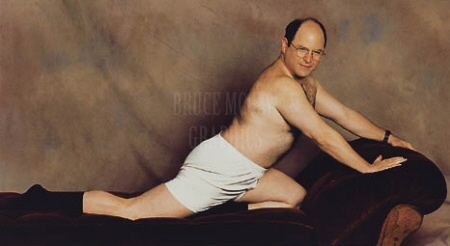
Probably kind of like this
Anyway.
Fast forward through autumn (which was notable for the insane Halloween storm that left me without power for nine days) through the fall semester of teaching, and into solid winter. A lot of people passed on it, several with very encouraging notes, and along with one rejection letter from an editor who, and I swear this is true, wrote that he wished that my book had been “more gothic.” I pouted through much of the new year. (I actually had no idea what the hell that was all about until recently, when I was talking to a friend of mine, BigRedK, who works at the Harvard University Press. She told me that apparently gothic themed books are immensely huge overseas. I declared that the next thing I wrote would have Spanish moss hanging over every damn thing in sight)
In the spring, things basically dried up on the manuscript. I sighed, my agent sighed, and I started putting together the basics for a new book, planning to write it over the summer.
Then, in late May, we had an interesting little nibble on our lure. In terms of catching stuff, this wasn’t just a minnow – this was a shark. It was Anne Sowards, an executive editor at Penguin who handled the Roc and Ace imprints. She works with people like Anne Bishop, Patricia Briggs, Jim Butcher, Rob Thurman, and pretty much every other author whose new releases I pine over. She was a judge for the last Amazon Breakthrough Novel contest.
Her name is a killing word.

That’s probably her average Saturday
And she was emailing my agent to let her know that she’d just picked up my manuscript and was wondering if it was still available.
Colleen said, “sure,” in a very casual email, and then immediately let me know in a decidedly less casual email. This led to an exchange between the two of us that revolved around the theme of: “Let’s not get too excited, because this might not happen, but if it does it would be incredibly amazing!” We both managed to avoid using either abbreviations or emoticons in these emails, which I will in the future reference every time someone asks me to give an example of professional behavior.
And, yeah, it happened. There was a little more to it, of course – while Anne was thinking it over, I submitted proposals for two sequels, as well as an outline of overall themes. Anne and I had a phone conversation to talk about the book and possible edits, which was very cool and lasted a little over an hour, and there was about a two-week period that I essentially spent hyperventilating, but it was awesome because Anne and Roc Books made an offer for Generation V and two sequels.
And that was such a fantastic day. Really, really great.
There’s a lot of stuff after that, of course. The contract, which someday will probably get its own post. The editing process. Lots of stuff.
But that’s how I got my editor. Basically, persistence was really important, but so was a lot of flexibility. Luck probably can’t be discounted either.
Next week, back to my slow stroll through every vampire influence I’ve ever encountered.

See? Little girls in movies are creepy.
How I Got An Agent
Everyone who has an agent has a different story of how it happened. So while this is the path that worked for me, this is by no means the only way to acquire representation. Similarly, just because this is what worked for me is no statement that this is the best (or even a particularly good) way to get an agent.
First, a little background. I know that there are authors who choose to go it alone, mailing their manuscript directly to the publisher and taking their chances with the slush pile. Some authors also choose to sidestep the traditional agent and publisher element entirely and go straight to self-publication. Without doubt, that has famously worked for some. For me, though, possibly because of the particular type of writing that I was doing at the time, this wasn’t even an option that I considered.
From about the age of 19 until I had finished my master’s degree, I was working exclusively in the field of short fiction. To get work like that published, you typically make a list of the magazines that will publish the kind of stuff you’re writing, then you just slap on a cover letter and send the work off. Rinse and repeat. You don’t need an agent for most of that. For one thing, very few magazines restrict themselves to agented work only (mainstream book publishers are a very different story), and for another, the contracts that I signed whenever a magazine accepted one of my short stories were about two or three paragraphs of basic laymen’s language.
After I received my master’s, I made the transition from short work to a book of fiction. One of the benefits of working so long with short work was that I got to spend a lot of time on the fine details of writing, like description, characterization, dialogue, motivation, and a compressed story arc. I wasn’t trying to refine those things over the course of a book – if something I was working on was just a train-wreck and had to be trashed, I was out maybe thirty pages. That’s a lot different than learning on a novel, where even something that is abandoned halfway through is a loss of at least a hundred.
So when I sat down to write my first novel, back in 2007, I had spent a long time getting to the point where I felt ready to do that. It took me about a year to write it – I was fairly hampered by the fact that I didn’t have a very clear path of where I was going, and just by the daunting task of doing it. The first time you do something is always going to be hard, simply because you’re working against the unknown. Can I write a whole novel? Well, you don’t really know until you try.
So in mid 2008, I had my first book. I’d done at least one full edit by the point that I thought it was ready to shop around, and I felt pretty good about it, so I decided to start an agent hunt.
Here’s another point to talk about – when do you start looking for an agent? Well, my opinion is that you don’t start fishing until you have good bait. This obviously depends on the field you’re working in (for example, a lot of the non-fiction writers I know were very comfortable looking for both agents and publishing houses with just a proposal), but if you haven’t sold a book before, at least have one in hand before you go looking. Otherwise you could get in a discussion with an agent, and they could be loving your concept and your sample chapter, but when they ask to read the rest of it and you reply, “Well, I haven’t written it, so I’ll get back to you in three months,” well… you’ve lost the chance to keep their interest. When you mail them that big attachment in three months, they’re probably going to have to spend a while trying to remember who you are. Better to hold off looking for agents until you’ve got something complete to show them.
Plus, looking for agents is time consuming and pretty depressing. You don’t want that particular albatross around your neck until you have gotten the first-book monkey off of your back. Rule of writing – don’t mix metaphors or animal-based depression objects.
Back to mid 2008. I made a list of the books that were both successful and fairly similar to the book I’d just completed. This doesn’t mean “both had first-person narrators,” this is mostly regarding audience. Will the person who read and loved this successful book over here be the kind of person I would suggest my book to? Once I had that giant stack, I opened up each book to the Acknowledgements page and looked for the part where Successful!Author thanked their agent. They all do. Even in the cases where it’s just a block of names in the Acknowledgements page, you can always look up that author’s website, and the agent will usually be listed under the Contact section. If all that has failed, just Google “(Author’s Name) Agent.” Because behind every successful author is an agent who put their name on their website.
After I’d ripped through my bookshelves, I had a list of about twenty names. Now came the fun part – I had to look up each and every agent. Is this agent still in business? If they’re in business, are they looking for new authors? If they’re still in business and looking for new authors, are they looking for authors like me? Run through that list of questions, and you’ll probably cut your initial list right in half. Don’t worry, though – if the agent you really wanted isn’t looking for new authors right now, look around on their website. Agents are like quail – they like to travel in coveys. From what I saw during my agent hunt, even the smallest agencies (which were usually headlined by that agent who had worked with the Successful!Author) usually have at least three working agents. Maybe the one you initially wanted isn’t looking for new authors (or new authors who are writing in your genre), but maybe one of the younger and hungrier agents that work with them is. Don’t worry too much about going with a newer agent – if they’re working closely with that older and more experienced agent, they have access to that person’s knowledge and contacts, plus, since they don’t have any big money-making authors in their stable yet, they’re probably more likely to be interested in you.
Important note: agents write up a list of the genres they work in, usually posted pretty clearly on their websites. Pay attention to that list. If you’re writing, say, historical romance, and you contact an agent whose bio clearly states that they are only interested in steampunk? You just wasted thirty minutes that you could’ve spent on an agent who might’ve read your stuff. Instead, all that happened was the agent read the first two lines of your email, deleted it because it was outside of the genre they work in, and then they felt annoyed and bitchy for the next few emails they read. Great job, troll. You probably screwed the writing dreams of the next two people in line.
Back to 2008. Write up a standardized query. This should be a short description of your book, a little biographical information, and an emphasis on how long the book is (wordcount) and the fact that it is done. You should adjust the query slightly for each agent (ie – salutation with their name, a line or two about why specifically you are querying them out of the thousands of agents out there), but to write up a fresh query for every agent is to invite Lovecraftian madness upon yourself. Always check the agent’s bio for what they want in a submission – some want just a query. Some want a query plus the first chapter. Some want a query plus the first hundred pages. Some want the query, but it has to be physically mailed to them. Some want a query submitted only through their website. Follow whatever instructions you’re being provided, because agents deal with a LOT of queries, and most aren’t going to spend much time with something that doesn’t meet their clearly expressed parameters.
There are two typically accepted approaches to an agent hunt – the Goldilocks approach and the carpetbombing approach. Goldilocks is where you send out one query, then wait anxiously (is this the perfect porridge?) for the reply before you send out another query. The pro on this is that it is typically viewed as more genteel and polite. The con is that you can sometimes wait six months for a form letter rejection. Carpetbombing is exactly what it sounds like – you make up a big list of agents and you send each and every one of them a letter at once. The pro on this is that you don’t waste all that downtime between rejections, and the con is that it’s generally viewed as rude and unseemly.
I’ll be honest. I prefer carpetbombing.
Well, within reason. When I was looking for an agent, I made sure that I had ten active queries at all times. Whenever I got a rejection, I’d just send another query out to the next name on my list. Also, even when carpetbombing it is considered good form to only query a single agent in an agency at a time. Not only is it mannerly, but it makes your carpetbombing chicanery somewhat less obvious. (and, really, emailing identical queries to ten people who work in the same offices and probably have lunch together all the time? Even I have to admit that that is a little crass. And stupid.)
Back in late 2008, I queried a total of about twenty agents. I was rejected by all of them over the course of about five to six months, but a few of them did read selections (or, in a few cases, the whole thing) before they turned it down, and some were extremely generous and offered me some constructive criticism. These were professionals in their field offering me their opinions, and you can bet that I paid attention.
With those things in mind, I took a break on querying and went back to the manuscript. It took another year, but I did a thorough revision of it, coming out with a new and polished manuscript in late summer of 2010. The first thing I did was send it through my original list of twenty who had rejected it the first time around (remember, this was my wish list of agents – they worked with bestselling authors), being clear in my query that they’d seen this thing before. They all turned it down again, this time in about six weeks.
But this time I knew that my manuscript was a lot stronger than last time, so I expanded my list of agents. There are some really good websites you can use to make a list, and I also suggest looking into the yearly Writer’s Market publications. Check out large genre organizations like the Science Fiction and Fantasy Writers of America (or whatever your genre is), and pay attention to any sections titled “Writer Beware” which are usually devoted to the kind of charlatans and users who love nothing better than an aspiring writer desperate to be published.
All of those places offer good warnings, but here’s the guiding principle I held to when I was looking for an agent: if they asked for a single penny of money up front, I looked elsewhere. No reputable agent is going to ask you for fees before something is sold. An agent for an author is a lot like the agent you get when you buy or sell real estate. Basically: they don’t get paid until you do. This has a lot of good benefits to it – namely, they are as committed to seeing you published as you are, since that’s the day that all the hours they’ve spent on you finally come with a paycheck attached. If you ever even think of handing your money over to anyone in the process of getting published, remember: you’ve just taken away any incentive they had to try to get you published. If they can make you pay for nothing once, they are going to figure out a way to make that happen again. Don’t become someone’s cash cow.
Also, you’re never going to write a check out to reputable publishers and agents. You earn for them, you don’t pay them. In the case of the agent, her pay will be a percentage of the advances and (hopefully) the royalties that the publishing house agrees to when they purchase your book. That’s also a good incentive for your agent to negotiate the best deal possible for your work.
But back to getting that person.
It was a lot of work, and it was very frustrating. It took a long time. There were a lot of times when I thought it would never ever happen. There were several close calls, where the agent read the entire book and “liked it, but didn’t love it.” If the devil had walked up to me at some point and offered to be my agent, it would’ve been really hard to say no.
But here’s the thing about anything regarding getting your book published. You can have thousands of people say no to you, but all it takes is one person who will say yes.
In October of 2010, I sent a package of materials to Colleen Mohyde, who worked out of the Doe Coover Agency. Now, I’d looked into this agency before, and I’d really liked the sound of Colleen’s bio, but I hadn’t queried her before this simply because she was asking for something that I really didn’t want to write – a synopsis. Oh, I really didn’t want to write that thing. But what happened is that another agent who was looking at my stuff had asked me for a synopsis, and since I was already in the front door with him (so to speak – I never in all of this process actually called or spoke to an agent face-to-face), I wrote the damn thing. Oh, I hated every minute of writing that god-forsaken document. I don’t think I hate any one thing more than having to write a summary of something I’ve written. You know Gollum reacts in the second Lord of the Rings movie to the elf bread? That’s what I do.
The agent who I’d written the synopsis for ended up passing on my manuscript, but now I had that horrid thing in hand, and once you’ve got it, why not use it? So I sent my query, the synopsis (hates it, precious! hates it!), and the first fifty pages of my book to Colleen, as per her submission guidelines. She emailed me back the next day, asking for the full manuscript on an exclusive 10-day basis. I agreed to that so fast that I probably looked like that cartoon roadrunner. Ten days later, she told me she wanted to represent my book, and we signed a contract.
After that, it was smooth sailing to publication!
……hah!
Seriously, no. Getting an agent is difficult and important. When I was trying to get my agent, I couldn’t imagine anything harder or more frustrating. Then we actually started trying to get the manuscript a publisher. This has been a massive post, so I’ll cover the hunt for a publisher (now with extra spearholders!) next week, but here are two basics to consider:
- Colleen Mohyde accepted me as her client in October of 2010.
- Roc Books bought an entirely different book in a completely different genre than the one Colleen originally agreed to represent in June of 2012. I hadn’t even written Generation V at the time that I signed a contract with Colleen.
After all of that, I hope that no one is discouraged about finding an agent. Believe me, it can happen. But when you start looking, keep in mind that it’s going to be tough, and you need to be prepared for a long haul. That way, if the best happens and you get an agent immediately, fantastic! But if the best doesn’t happen, then you won’t get completely discouraged and give up too early. Because if you keep trying, it could happen.
 M. L. Brennan