Monthly Archives: December 2015
Everything I Read In 2015
What did I read in 2015?
A lot.
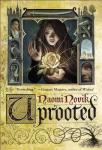
Basically, I read where my interest led me. Some I got from trips to the bookstore just because they looked neat. Some I enjoyed, some sucked. That’s the fun of a bookstore trip. I got The Creation of Anne Boleyn, Princesses Behaving Badly, The Empathy Exams, Maplecroft, and Uprooted like this.
 Some books I read because everyone on Twitter was talking about them – such as The Martian, The Traitor Baru Cormorant, or The Grace of Kings. Some books I read because people I knew had written them – like Hold Me Closer, Necromancer, The Lives of Tao, Last First Snow, and Against A Brightening Sky. I read a few books because I’d been waiting impatiently for them to come out and devoured them as soon as they hit print, like Visions of Silver. A few others were recommended by people whose taste I trusted, like when Max Gladstone announced to the world at large that everyone needed to read Seraphina.
There were also some books that I saw on a library shelf, and read 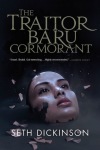 because, hell, why the fuck not? A library is free and wonderful and we all need to support our libraries. That’s how I read Village of Secrets and Elizabeth Warren’s A Fighting Chance. I also read a few books because I hadn’t read them in school, and I like to try to keep pushing my reading on the classics – that’s why I read The Awakening, A Passage To India, The Age of Innocence, and White Fang.
 I read some books because I bought them at cons or at airports. Never underestimate these as sources of reading material. That’s how I got Karen Memory, Concussion, The Tropic of Serpents, and The Art of Asking. I also read a few books because I met their authors at cons – that was Owl and the Japanese Circus and Half-Resurrection Blues.
I read other books because I’d gotten them and they’d sat on my 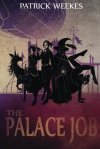 To-Read shelf (yes, it’s no longer a pile – it’s a small bookshelf in my dining room – YES I FEEL SHAME) for upwards of several years. Some of them were worth the wait – some weren’t. This included Tyrannosaurus Sue, The Lucifer Effect, Salvation City, and Blood Matters.
I read a big pile of books because I was doing research for a book that 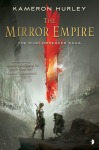 I’m currently writing. I’m not going to divulge the super-secret details of my current book project, but these books included Snow Country, Women of the Pleasure Quarters, Geisha: A Life, Hiroshima Nagasaki, Black Rain, Autobiography of a Geisha, Samurai!, Grass For My Pillow, and Geisha. Fear not, gentle readers – someday this mysterious and seemingly unconnected list of books will make sense.
I read some other books that had been out for a while, and which I really thought that I should read. Just like reading classics of literary fiction to keep expanding my comfort with that field, I read some  fantasy and sci-fi simply because they were generally acknowledged to be important books in the genre. Again, some were awesome. Some left me scratching my head a little. Just like the classic books. Some of these were The Hundred Thousand Kingdoms, The Mirror Empire, The Lies of Locke Lamora, The Magicians, The Curse of Chalion, The Broken Crown, Daughter of the Empire, and Daggerspell.
And then there were the books that I heard about somehow (on NPR, 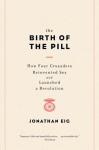 on someone’s blog, in conversation, seeing in passing, and so on) and immediately felt that I had to read IMMEDIATELY. These included The Birth of The Pill, All Joy and No Fun, Digging For Richard III, As You Wish, Mating In Captivity, and Voices In The Ocean.
Plus, the books I read because I saw something based on it or related to it on TV or at the movies. This includes The Forsyte Saga, The 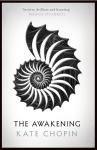 Buccaneers, and The Best Exotic Marigold Hotel.
And then there was everything else.
Here’s the full list.
1. Masks by E. C. Blake
2. The Creation of Anne Boleyn by Susan Bordo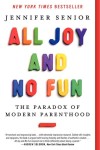
3. The Best American Short Stories 2014 edited by Jennifer Egan
4. Princesses Behaving Badly: Real Stories From History Without The Fairy-Tale Endings by Linda Rodriguez McRobbie
5. The Forsyte Saga by John Galsworthy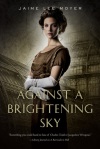
6. The Year of Reading Dangerously by Andy Miller
7. Control Point by Myke Cole
8. The Fashion File: Advice, Tips, and Inspiration from the Costume Designer of Mad Men by Janie Bryant
9. The Empathy Exams by Leslie Jamison
10. The Birth of The Pill: How Four Crusaders Reinvented Sex and Launched a Revolution by Jonathan Eig
11. The Martian by Andy Weir
12. Karen Memory by Elizabeth Bear
13. Hold Me Closer, Necromancer by Lish McBride
14. Blood Red by Mercedes Lackey
15. White Fang by Jack London
16. Call of the Wild by Jack London
17. Vision in Silver by Anne Bishop
18. The Awakening by Kate Chopin
19. Beggars Ride by Nancy Kress
20. The Tropic of Serpents by Marie Brennan
21. Seraphina by Rachel Hartman
22. The Magicians by Lev Grossman
23. The Binding Chair by Kathryn Harrison
24. It Started With A Scandal by Julie Anne Long
25. The Lies of Locke Lamora by Scott Lynch
26. Undercity by Catherine Asaro
27. The Broken Crown by Michelle West
28. The Penelopiad by Margaret Atwood
29. Up In The Air by Walter Kirn
30. The Hundred Thousand Kingdoms by N.K. Jemisin
31. The Lucifer Effect: Understanding How Good People Turn Evil by Philip G. Zimbardo
32. The Shattered Court by M. J. Scott
33. Half-Resurrection Blues by Daniel Jose Older
34. The Grace of Kings by Ken Liu
35. All Joy and No Fun: The Paradox of Modern Parenthood by Jennifer Senior
36. The Palace Job by Patrick Weekes
37. The Voyage of the Basilisk by Marie Brennan
38. Geisha, A Life by Mineko Iwasaki
39. Women of the Pleasure Quarters: The Secret History of the Geisha by Lesley Downer
40. The Lives of Tao by Wesley Chu
41. Samurai! by Saburo Sakai & Martin Caidin & Fred Saito
42. Hiroshima Nagasaki: The Real Story of the Atomic Bombings and Their Aftermath by Paul Ham
43. Red Seas Under Red Skies by Scott Lynch
44. Nightless City: Geisha and Courtesan Life in Old Tokyo by J. E. de Becker
45. The Street of a Thousand Blossoms by Gail Tsukiyama
46. Plum Wine by Angela Davis-Gardner
47. Black Rain by Masuji Ibuse
48. Snow Country by Yasunari Kawabata
49. Autobiography of a Geisha by Sayo Masuda
50. The Curse of Chalion by Lois McMaster Bujold
51. Steel’s Edge by Ilona Andrews
52. Uprooted by Naomi Novik
53. Grass for My Pillow by Saiichi Maruya
54. A Shade of Magic by V. E. Schwab
55. Geisha: A Unique World of Tradition, Elegance, and Art by John Gallagher
56. The Teahouse Fire by Ellis Avery
57. Paladin of Souls by Lois McMaster Bujold
58. The Sharing Knife by Lois McMaster Bujold
59. Empress by Shan Sa
60. Last First Snow by Max Gladstone
61. The Hallowed Hunt by Lois McMaster Bujold
62. Shards of Hope by Nalini Singh
63. So You’ve Been Publicly Shamed by Jon Ronson
64. A Fighting Chance by Elizabeth Warren
65. Shards of Honor by Lois McMaster Bujold
66. Village of Secrets: Defying The Nazis In Vichy France by Caroline Moorehead
67. Daughter of the Empire by Raymond E. Feist and Janny Wurts
68. Mating In Captivity: Reconciling The Erotic & the Domestic by Esther Perel
69. Blood Matters: A Journey Along the Genetic Frontier by Masha Gessen
70. Probability Moon by Nancy Kress
71. Salvation City by Sigrid Nunez
72. The Traitor Baru Cormorant by Seth Dickinson
73. Against A Brightening Sky by Jaime Lee Moyer
74. The Anglo Files by Sarah Lyall
75. As You Wish: Inconceivable Tales from the Making of The Princess Bride by Cary Elwes
76. His Majesty’s Dragon by Naomi Novik
77. Dearest Rogue by Elizabeth Hoyt
78. Googled: The End of the World as We Know It by Ken Auletta
79. The Buccaneers by Edith Wharton
80. Archangel’s Legion by Nalini Singh
81. The Genius Factory: The Curious History of the Nobel Prize Sperm Bank by David Plotz
82. The Magician King by Lev Grossman
83. The Age of Innocence by Edith Wharton
84. The Mirror Empire by Kameron Hurley
85. Selfish, Shallow, and Self-Absorbed: Sixteen Writers on the Decision Not To Have Kids edited by Meghan Daum
86. The Brave Escape of Edith Wharton by Connie Nordhielm Wooldridge
87. Voices In The Ocean by Susan Casey
88. Owl and the Japanese Circus by Kristi Charish
89. Throne of Jade by Naomi Novik
90. A Passage To India by E. M. Forster
91. Daggerspell by Katharine Kerr
92. Empire of Dust by Jacey Bedford
93. Maplecroft by Cherie Priest
94. Tyrannosaurus Sue: The Extraordinary Saga of the Largest, Most Fought Over T-Rex Ever Found by Steve Fiffer
95. Concussion by Jeanne Marie Laskas
96. The Art of Asking by Amanda Palmer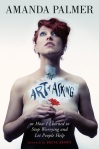
97. The Best Exotic Marigold Hotel by Deborah Moggach
98. Digging For Richard III by Mike Pitts
99. War and XPs by Rich Burlew
What I Read (and loved) So Far In 2015, Fourth Quarter
Whoa, end of the year. That came FAST.
2015 ends in about 12 hours, so I’m going to call my year in reading officially finished. I don’t think I’m going to be finishing anything else, particularly since I’ve just cracked open Django Wexler’s The Price of Valor. This year I read 99 books — definitely a solid year in reading. If you’re curious, you can check out my previous literary high-points in First Quarter, Second Quarter, and Third Quarter. And I might do a full reading round-up later in the week, depending on whether I think anyone might be interested or not.
Anyway, of the books that I read between October and December, six left a major impact on me. Here they are, in the order that I read them:
1. The Buccaneers by Edith Wharton
 Nan and Jinny St George have both wealth and beauty in generous supply. In the New York society of the 1870s, however, only those with old money can achieve the status of the elite, and it is here that the sisters seem doomed to failure.
Nan’s new governess, Laura Testvalley, herself an outsider, takes pity on their plight and launches them instead on the unsuspecting British aristocracy. Lords, dukes, marquesses and MPs, it seems, not only appreciate beauty, but also the money that New York’s nouveaux riches can supply.
A love story of love and marriage among the old and new moneyed classes, The Buccaneers is a delicately perceptive portrayal of a world on the brink of change.
For a long time, the only thing I’d read by Edith Wharton was Ethan Frome, which I read in high school. That…. did not leave me with the desire to read more Wharton. But over the last year, I taught a college short story class, and the anthology had several Wharton stories – the delicious comedy of manners ones. This was a different side to Wharton – though, in fairness, I’m pretty sure that a lot of that style of writing might also have gone over my head as a sixteen-year-old. However, I’m really not interested in re-reading Ethan Frome to find out – that book was motherfucking depressing. I can say, however, that I absolutely adored The Buccaneers, and would highly recommend it to others. Others being, obviously, everyone who reads this blog. So consider yourself recommended!
2. The Magician King by Lev Grossman
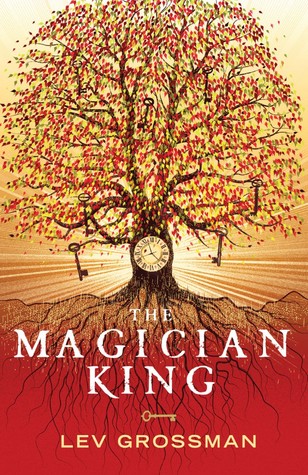 The Magicians was praised as a triumph by readers and critics of both mainstream and fantasy literature. Now Grossman takes us back to Fillory, where the Brakebills graduates have fled the sorrows of the mundane world, only to face terrifying new challenges.
Quentin and his friends are now the kings and queens of Fillory, but the days and nights of royal luxury are starting to pall. After a morning hunt takes a sinister turn, Quentin and his old friend Julia charter a magical sailing ship and set out on an errand to the wild outer reaches of their kingdom. Their pleasure cruise becomes an adventure when the two are unceremoniously dumped back into the last place Quentin ever wants to see: his parent’s house in Chesterton, Massachusetts. And only the black, twisted magic that Julia learned on the streets can save them.
The Magician King is a grand voyage into the dark, glittering heart of magic, an epic quest for the Harry Potter generation. It also introduces a powerful new voice, that of Julia, whose angry genius is thrilling. Once again Grossman proves that he is the cutting edge of literary fantasy.
I think it’s honestly hard to beat Grossman for prose quality. For me, he’s right up there with Gaiman and Morgenstern (Erin, not the made-up Princess Bride author) for sheer beauty of language. I love his sentences, his wryness, his delicious embrace and commentary on the absurd, the cliché, and the beautiful. It’s entirely possible that I could read just about anything by Grossman and be very well pleased. The Magician King had the same issue as the first book – namely, there’s a point where as a reader I think to myself, “This is all quite lovely, and I’m having a nice time, but is there going to be a plot at any point?” – and, full credit to Grossman, the plot does emerge soon after. But the writing itself is so fantastic that I still enthusiastically gave it five stars when it came time to rank it. I also really enjoy the way that Grossman cuts the fairy-tale sweetness and safety with some extremely nasty and scarring elements – kudos, and I’m looking forward to picking up the third.
3. The Mirror Empire by Kameron Hurley
 On the eve of a recurring catastrophic event known to extinguish nations and reshape continents, a troubled orphan evades death and slavery to uncover her own bloody past… while a world goes to war with itself.
In the frozen kingdom of Saiduan, invaders from another realm are decimating whole cities, leaving behind nothing but ash and ruin.
As the dark star of the cataclysm rises, an illegitimate ruler is tasked with holding together a country fractured by civil war, a precocious young fighter is asked to betray his family and a half-Dhai general must choose between the eradication of her father’s people or loyalty to her alien Empress.
Through tense alliances and devastating betrayal, the Dhai and their allies attempt to hold against a seemingly unstoppable force as enemy nations prepare for a coming together of worlds as old as the universe itself.
In the end, one world will rise – and many will perish.
I have a great respect for Kameron Hurley as an essayist (plus, I follow her on Twitter – so, yeah, there’s that), but I hadn’t read any of her epic fantasy, though I think I would have had to be dead to have missed the buzz. This was my first – and all I’d heard was “gender-bending” – listen, who in their right mind views THAT as the takeaway here? I see multiple intricate societies with very different social and power structures, carnivorous fucking plants, PEOPLE RIDING BEARS, and the incredible mind-fuck of the mirror universe except without distinguishing beards. The fact that one society has three genders, another has five, and another one just seems to have two (but also what appeared to be a giant praying mantis as an Empress – at least I think that’s what it was) is so far down the list of interesting things that it wouldn’t even make my final cut. Anyway, I liked this a lot – but while I sort-of enjoyed it for the first half, the second half is when shit got real. Very interesting, very mind-fucking, an interesting mix of grim and hopeful, definitely not like anything I’d ever read before.
4. Maplecroft by Cherie Priest
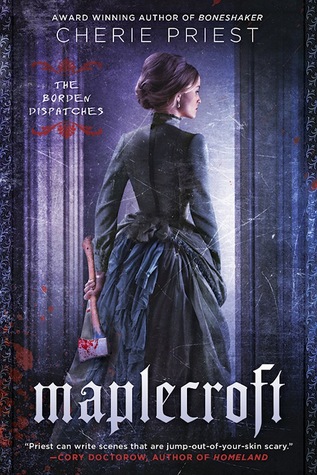 Lizzie Borden took an axe and gave her mother forty whacks; and when she saw what she had done, she gave her father forty-one….
The people of Fall River, Massachusetts, fear me. Perhaps rightfully so. I remain a suspect in the brutal deaths of my father and his second wife despite the verdict of innocence at my trial. With our inheritance, my sister, Emma, and I have taken up residence in Maplecroft, a mansion near the sea and far from gossip and scrutiny.
But it is not far enough from the affliction that possessed my parents. Their characters, their very souls, were consumed from within by something that left malevolent entities in their place. It originates from the ocean’s depths, plaguing the populace with tides of nightmares and madness.
This evil cannot hide from me. No matter what guise it assumes, I will be waiting for it. With an axe.
Dear lord, was this Lovecraftian. In fact, I think Cherie Priest just out-Lovecrafted Lovecraft. I know we just (finally) retired the Lovecraft statue, but maybe we could’ve found a compromise and created a bust of Cherie to hand out as an award.
I’m not really one for contagious madness as a story device (in fact, it skeeves me out good and proper), but this was incredibly done. Priest uses a lot of different characters to tell the story, and is incredibly good at depicting the slide into madness. Plus, a lot of good creepiness fact, and the historical fiction element. She’s got a lot of balls in the air here, but never drops a single one. Utterly impressive.
5. Concussion by Jeanne Marie Laskas
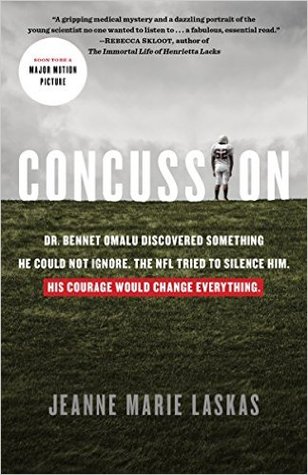 Jeanne Marie Laskas first met the young forensic pathologist Dr. Bennet Omalu in 2009, while reporting a story for GQ that would go on to inspire the movie Concussion. Omalu told her about a day in September 2002, when, in a dingy morgue in downtown Pittsburgh, he picked up a scalpel and made a discovery that would rattle America in ways he’d never intended. Omalu was new to America, chasing the dream, a deeply spiritual man escaping the wounds of civil war in Nigeria. The body on the slab in front of him belonged to a fifty-year-old named Mike Webster, aka “Iron Mike,” a Hall of Fame center for the Pittsburgh Steelers, one of the greatest ever to play the game. After retiring in 1990, Webster had suffered a dizzyingly steep decline. Toward the end of his life, he was living out of his van, tasering himself to relieve his chronic pain, and fixing his rotting teeth with Super Glue. How did this happen?, Omalu asked himself. How did a young man like Mike Webster end up like this? The search for answers would change Omalu’s life forever and put him in the crosshairs of one of the most powerful corporations in America: the National Football League. What Omalu discovered in Webster’s brain—proof that Iron Mike’s mental deterioration was no accident but a disease caused by blows to the head that could affect everyone playing the game—was the one truth the NFL wanted to ignore.
I picked this up at an airport kiosk and read it during my flight. Now, I picked it up for one simple reason – Jeanne Marie Laskas was one of my professors during grad school. See, my graduate MFA program had this whole idea about making sure that its graduates were at least somewhat well-rounded as artists – there were three tracks that you could study – fiction, non-fiction, and poetry. We all had to take one course in a track other than our primary field of study – which meant that whenever you took one of the big overview courses (of which there were three, one for each) about 2/3rds of the people in that course were some very grumpy people who were having to study outside of their field of interest.
It was character building.
Now, since I am not even close to being a poet, and in fact have not studied poetry academically since high school (which, incidentally, did not stop me from acting like I knew what I was doing when I had to TEACH poetry in a basic college literature course two semesters ago – but, very importantly, that was about paying my mortgage, so I made it work. With, it must be said, some assistance from NPR.), so I took the non-fiction overview with Laskas. It was, I must say, fantastic. I gained a whole new appreciation for memoir, a deep and virulent hatred for the misleading narrative transgressions of Midnight In The Garden Of Good And Evil, and overall had a lovely semester. I also always have an interest in Laskas’s work, as she is a really excellent writer. Concussion was born out of a GQ article that Laskas wrote on the same subject, and honestly the material is slightly thinner than you’d like to see for a full-length book project, but it’s a fast and extremely illuminating work.
6. The Art of Asking by Amanda Palmer
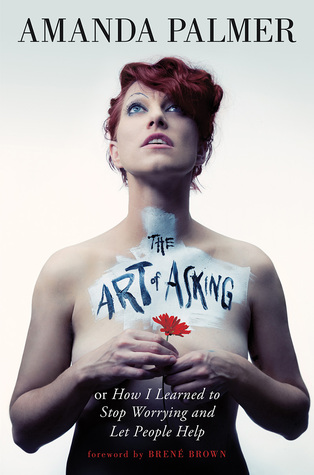 Rock star, crowdfunding pioneer, and TED speaker Amanda Palmer knows all about asking. Performing as a living statue in a wedding dress, she wordlessly asked thousands of passersby for their dollars. When she became a singer, songwriter, and musician, she was not afraid to ask her audience to support her as she surfed the crowd (and slept on their couches while touring). And when she left her record label to strike out on her own, she asked her fans to support her in making an album, leading to the world’s most successful music Kickstarter.
Even while Amanda is both celebrated and attacked for her fearlessness in asking for help, she finds that there are important things she cannot ask for-as a musician, as a friend, and as a wife. She learns that she isn’t alone in this, that so many people are afraid to ask for help, and it paralyzes their lives and relationships. In this groundbreaking book, she explores these barriers in her own life and in the lives of those around her, and discovers the emotional, philosophical, and practical aspects of THE ART OF ASKING.
Part manifesto, part revelation, this is the story of an artist struggling with the new rules of exchange in the twenty-first century, both on and off the Internet. THE ART OF ASKING will inspire readers to rethink their own ideas about asking, giving, art, and love.
I enjoyed this book quite a lot – it functions well as a memoir, but also as an overall statement of belief and purpose in shared communities and in voluntary acts of support and gift-giving. It’s a lovely book to read around the holidays (I read this on Christmas), since so much of it is Palmer showing the massive extent to which she is willing to trust complete strangers, and also the large extent to which that trust is honored. And, for those interested in these sorts of things, the book also offers some extremely interesting and on-point insight into how Palmer was able to use Kickstarter to fund her album, in the most successful Kickstarter at the time (obviously, she has now been blown out of the water by the Oatmeal cat card-game). Hint: the answer isn’t something that would appear on any Market Yourself And Your Book In Ten Easy Steps! blog-post or self-published pamphlet.
Did you read any of these this year? If so, what do you think? Did you read others that were awesome? If so, throw them in the comments section! And most importantly — have a fantastic 2016!
 M. L. Brennan