Monthly Archives: August 2012
Favorite Things
This post is going to be on the short side. Yes, there have been many exciting developments with the manuscript, which is being passed over to a copy editor, and, yes, I have been meaning to put up the Anita Blake post for a while. But the manuscript post will have to wait, as will Anita Blake. For one thing, I’ve been researching (okay, that makes it sound like more than what I did, which was look it up on Wikipedia) what has been going on with the Anita Blake series since I stopped reading it, and holy shit! I mean… whoa. It was pretty clear that things were heading in a kind of weird direction, which was why I stopped reading, but… I did not see anything quite like that happening. Those plot summaries have been… interesting.
But, more to come on that later! (…resisting… horrible…. crass… Anita… Blake… joke… must… be… strong… need… distraction…)

Yes, that will do it. Hee hee.
Okay, better now.
What’s mostly happening is that I’m back at work, so that’s taking up a bit of my time. But fear not, there will be more substantial posts to come. In the meantime, I give you delightfully insubstantial fluff with all of the intellectually nutritious value of cotton candy.
Oh, Internet. I just can’t quit you.
Admittedly, my version of Favorite Things comes with a lot less swag than when Oprah would do it (which I know through pop culture osmosis, not because I used to watch it), but it has a kind of “brown paper packages tied up with strings” quality that appeals to me. And, hopefully my reader(s?).

Just imagine if she’d had the Internet. We’d all know what rhymed with “LOLCats”
First favorite thing!
The SummHarry by Lucy Kingsley.
This is definitely number one, because it combines Harry Potter fandom, snark, and actual artistic talent all into one delightful package! If I’m ever rich enough to have my own private office where I don’t have to make decorating compromises (hint: Generation V is due out from Roc in May 2013!), I am totally buying this, framing it, and putting it on the wall.
Second favorite thing!
VlogBrothers by John and Hank Green.
I’m a huge fan of the Vlogbrothers, and if you’ve never heard of them or of Nerdfighteria, why are you still even reading this? Go forth and discover what happens when complete geekery meets video blogging! Plus, they are almost at their 1,000th video upload, and that’s a pretty impressive number. Particularly given how much time they probably spend making and editing those videos. And yet John Green is also the published author of a number of well-reviewed books.
Some people are clearly better at time management than I am.
Third favorite thing!
When I was younger, I would spend every Sunday watching Mystery Science Theater 3000 on the SciFi channel. Because it was the SCIFI channel back then, not the idiotic Syfy abomination.
But, anyway, I saw a number of truly horrible movies. Manos, Hands of Fate. Hamlet, the crappy German version. The Horror of Spider Island. That weird one where the kids on the beach were threatened by the rubber-suit thing that had hot-dogs in its mouth.
And they were all completely awesome, because of the MST3K jokes.
But then MST3K went off the air, and even though there are a bunch of episodes on DVD (which you should totally rent!), I was really sad.
Then, something magical happened. I found out that the MST3K guys were using the Internet to produce audio commentaries that you could buy and then watch in sequence with the movie! And that because of that, they were now able to put commentaries to NEW movies! They did all six Star Wars movies! And seven of the Harry Potter films! And Thor!
Best of all, they’d even done Twilight. Watching the MST3K “best of” clips is the closest I will ever come to viewing those films, but they. Are. AWESOME.
How I Got An Editor
In my last post about my path to publishing glory, I covered the long process of signing with my agent. Let me take my mind back to those halcyon days, when I was sure that publication and actual cash were right around the corner. It was 2010 and I was 28, still hoping that someone would put me on a 30 Writers Under 30 list, or start a review by writing “Hot Young Writing Talent!”
Okay, it didn’t happen.
What happens once you sign with an agent is that the agent starts doing her job – namely, sell your book. This is an interesting experience, because up until this point, selling my book had been a very one-person job. Like writing itself, selling for me was a very solitary experience. I made lists, I researched a lot, but I wasn’t part of any writing group (and I have a feeling that being part of a writing group focused on getting agents would’ve been like being in the center of a cloud of despair) and I tried to keep my family as much in the dark as possible about the process itself.
So, it’s pretty lonely, and there were a lot of late-night moments of seriously wondering if I was just a talentless hack. But the other side of that was that I was completely in charge of my own destiny. Who I sent something to, whether I entered a manuscript into a contest, whatever, I was the one making the calls. At every point I knew exactly what was going on.
An agent makes that very different. For one thing, now someone with a professional stake in, you know, getting paid, had told me that she wanted to work with me. That’s pretty helpful during those “I’m just a hack!” moments. The other thing was that, for the first time, someone else took stuff on. I had to email Colleen to find out what was going on with the manuscript – that took some getting used to. It was also different to see an ad or something for a press or a contest and think, “Oh, dude, that would be perfect for the manuscript!” but then have to contact my agent about it instead of just going forward with it.
It was an adjustment. But I really feel that getting an agent was incredibly important and worthwhile, and in retrospect I would never have done anything differently. For one thing, I’m saying that from the point I’m at now – late August of 2012, with an accepted book rattling its way toward publication, and I have seen up close exactly how indescribably useful it is to have my agent and how very much she is earning her commission. (hint: I am fairly sure that without Colleen, my contract with Roc could well have included language concerning firstborn children, and I never would’ve known)
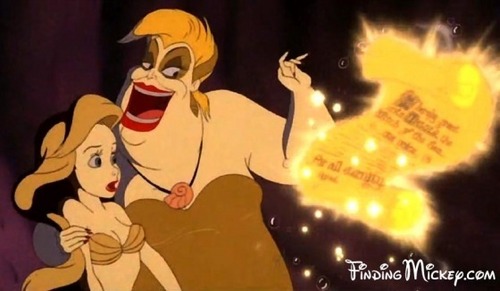
Really, combined accounting is the way to go with a series… yes, you can absolutely trust me…
Once my agent and I were working together, she started submitting my manuscript. The benefit of the agent is two-fold here – for one thing, having an agent means that you can side-step the slush pile at the publishing house. Don’t get me wrong – the slush pile has worked for some and will continue to do so. But it’s better to avoid it. Plus, your agent brings with her a career’s worth of contacts – she’ll look at a manuscript and think, “Oh, I’ll send it to this editor I know over here, because I know that this is up her alley.” Are those contacts that fool-proof route to publishing? No, and I’ll talk about that later, but it never hurts to give networking a shot.
The sad truth was, though, that my first book just didn’t get a publisher. It was a pretty hard kick in the ass, but not that uncommon – I knew other people from my writing program who had also acquired agents, and none of them were able to find publishers either. Believe me, trying to get a book published is not for wusses.
Basically, I did the only thing I could – I rolled up my sleeves and wrote something else. This was what would become Generation V, the book that is being published in May 2013 by Roc. (you see how subtle I was there?) It was under a different title at the time, and someday I’ll do a fun post about title evolution, but for now I’m trying to keep on topic. I wrote Generation V in the summer of 2011, revised it, and showed it to Colleen. It wasn’t the kind of book that she normally worked with, but since we were already working together, she decided to represent it. That was a huge plus – I was willing to go through another agent hunt, but believe me, I was really happy to still have Colleen in my corner.
Here’s how it went:
In September of 2011, my agent sent Generation V to the editors at eleven different publishing houses. A few places turned it down fairly fast, but because I was working with an agent, usually I got a paragraph or two of response. Most of the editors used the phrase, “I liked it, but I didn’t fall in love with it.” I cannot properly express how maddening it is to hear that, but it’s actually a valid response. An editor is looking for not only what they think will sell, what will make money, what will do twenty other things, but also something that they can seriously get behind. After all, they’re going to be spending a lot of time on that manuscript. Plus, I’m sure that on most days Generation V was one of about twenty books sitting on their desks, most of which had a lot of similar themes going on.
Plus, there’s my personal theory, which I picked up from years working in short stories. If you have a manuscript (or story) that is good enough to be published, then that just moves up to another category, which is still really really crowded. Generation V is good, and that’s not just my opinion – I have professionals on my side now. But probably it was sitting next to fifteen other manuscripts, all of which were also good. And the editor might have two slots in their publishing calendar to fill. Which two get it? The ones that the editor loves, not just likes.
That’s pretty rational, of course. I believe that, but it doesn’t mean that there weren’t a few days that I didn’t wish that I could put my manuscript in some literary equivalent of a slutty dress and have it bend over in front of editors at lunch.
I’m not sure what that would look like.
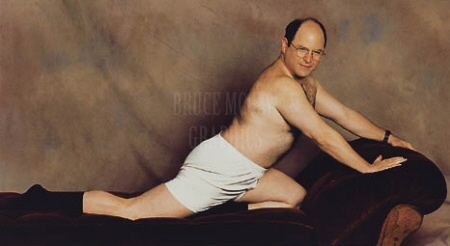
Probably kind of like this
Anyway.
Fast forward through autumn (which was notable for the insane Halloween storm that left me without power for nine days) through the fall semester of teaching, and into solid winter. A lot of people passed on it, several with very encouraging notes, and along with one rejection letter from an editor who, and I swear this is true, wrote that he wished that my book had been “more gothic.” I pouted through much of the new year. (I actually had no idea what the hell that was all about until recently, when I was talking to a friend of mine, BigRedK, who works at the Harvard University Press. She told me that apparently gothic themed books are immensely huge overseas. I declared that the next thing I wrote would have Spanish moss hanging over every damn thing in sight)
In the spring, things basically dried up on the manuscript. I sighed, my agent sighed, and I started putting together the basics for a new book, planning to write it over the summer.
Then, in late May, we had an interesting little nibble on our lure. In terms of catching stuff, this wasn’t just a minnow – this was a shark. It was Anne Sowards, an executive editor at Penguin who handled the Roc and Ace imprints. She works with people like Anne Bishop, Patricia Briggs, Jim Butcher, Rob Thurman, and pretty much every other author whose new releases I pine over. She was a judge for the last Amazon Breakthrough Novel contest.
Her name is a killing word.

That’s probably her average Saturday
And she was emailing my agent to let her know that she’d just picked up my manuscript and was wondering if it was still available.
Colleen said, “sure,” in a very casual email, and then immediately let me know in a decidedly less casual email. This led to an exchange between the two of us that revolved around the theme of: “Let’s not get too excited, because this might not happen, but if it does it would be incredibly amazing!” We both managed to avoid using either abbreviations or emoticons in these emails, which I will in the future reference every time someone asks me to give an example of professional behavior.
And, yeah, it happened. There was a little more to it, of course – while Anne was thinking it over, I submitted proposals for two sequels, as well as an outline of overall themes. Anne and I had a phone conversation to talk about the book and possible edits, which was very cool and lasted a little over an hour, and there was about a two-week period that I essentially spent hyperventilating, but it was awesome because Anne and Roc Books made an offer for Generation V and two sequels.
And that was such a fantastic day. Really, really great.
There’s a lot of stuff after that, of course. The contract, which someday will probably get its own post. The editing process. Lots of stuff.
But that’s how I got my editor. Basically, persistence was really important, but so was a lot of flexibility. Luck probably can’t be discounted either.
Next week, back to my slow stroll through every vampire influence I’ve ever encountered.

See? Little girls in movies are creepy.
On Vampires: Anne Rice and the Vampire Chronicles
Anne Rice is the person who made one of the biggest recent changes to the vampire myth. Namely, her work made vampires homoerotic.

Yup. We’re just two dudes. Two tooootally heterosexual dudes. Just bro-ing out here. In a straight way.
Before Rice hit the scene, Dracula bit pretty girls while gal vampires heaved menacingly at human guys. Then the gal vampires were usually staked by those guys, because that was always the trial run before going up against Dracula.
But notice the pattern – Dracula either hung out completely by himself (maybe with the occasional wolfman if this was a mash-up movie), or had kind of a back-up chorus of three or fewer bosomy vampire gal-pals. And the biting always fell along very strict hetero-normative sexual lines. Boys only bite girls! Girls try unsuccessfully to bite guys!
Rice’s first book, though, is about a guy named Louis who is bitten and turned by a vampire named Lestat. Just two guys biting, ya’ll. They then live together for years, biting other people merrily regardless of gender, until one day they adopt a little girl named Claudia, and show everyone that family is about love, not sexual orientation.
You know, it wasn’t until I was actually thinking about the movie to write this blog entry that I started getting all “Claudia Has Two Daddies” about it. This makes sense, since it was also not until YEARS after I’d read it that I realized that The Chronicles Of Narnia has an entire Jesus sub-text to it.
Okay, and maybe that “adopt a little girl” last part was that Lestat makes a bone-headed decision to turn a six-year-old girl into a vampire, which ends badly first when Claudia is, you know, kind of pissed about being forever trapped in the body of a six-year-old when her mind kept developing. She tries to kill Lestat, but six-year-olds can’t do anything right, and he lives. Then there’s some running around in Europe, and the vampires over there are creeped out by Claudia and burn her.

Little girls are always creepy. It’s why horror movies love having little girl ghosts or little girl psychics. But little girl vampires are even creepier, especially when they have hair like that and start trying to totally hit on Brad Pitt.
My first exposure to Rice’s vampires was when I saw the movie. It came out in 1993, but this is another one that I saw on video, so I’m going to hazard a guess that I saw it around 13 or 14. Notable about the film is that this was done back when Brad Pitt was known as a total pretty-boy actor (remember those days?), and that Kirsten Dunst played the six-year-old. And that I think that ¾ of the movie’s budget must’ve been spent on hair-care products, because everyone looks like they are in the middle of a Vidal Sassoon ad. The vampire as played by Fabio had totally just arrived – note that old-school Draculas always have very slickly pomaded hair a la Legosi.

Yeah, no one was taking him seriously as an actor back then. Probably because he looked like Fabio’s understudy.
I read the book Interview With The Vampire a few years later, probably around 16 or 17. The Vampire Chronicles were pretty big in my high school at the time, which is kind of funny now that I look at high schoolers and Twilight. Did my generation’s parents look at us and wonder what the hell was up with all the vampire humpery? Probably. At least our vampires were post-high school Eurotrash, though. And they never sparkled.
True fact: I had a friend in high school who would very seriously tell you that she was a vampire. It was pretty weird. So I shouldn’t claim too much high ground over contemporary high school kids – after all, we were pretty stupid at times too.
Anyway, back to the Vampire Chronicles. After I read the first book, I kind of limped through The Vampire Lestat. Okay, I skimmed it. Truth: Lestat spends so much of that book covering his ass for shit that went down in book one that I seriously wonder whether Anne Rice had any original plans to write a sequel. Plus, Lestat whines. Worse than Louis in book one.
Note this other new addition to the vampire mythos: The vampire as brooding whiner. And Anne Rice completely pioneered this. I mean, sure, Dracula will periodically get chatty, and he spends a lot of time wandering around Castle Dracula in his bathrobe with his hair still in curlers, but the man doesn’t whine. He turns around and says, “Dude, I need to get out of my rut!” Then he buys property in England and starts biting British girls – problem solved! He could write his own self-help book.

This is the face of depression.
Not so with Rice vampires. Pretty fluffy hair, brooding and whining. Interesting to note is that her vampires are pretty damn eroticized, but become basically impotent when they are changed. It’s a neat trick, and probably part of why the Rice vampires were so popular with high school girls.
There’s no staking with Rice vampires. They can be burned with sun or fire, and I sort of remember some beheading chatter at some point (this was a while ago), but that’s it. Fundamentally, Rice also shifted the playing field in her books. Dracula is about when the vampire comes into contact with people, and how they have to drive him back. Rice vampires hang out together, live together, play together, comb their shiny shiny hair together, and get super political. Humans aren’t involved. In fact, when humans do get involved, they are invariably turned into vampires. They don’t say, “Shit! You’re killing people! I need to get my Jonathan Harker on!” They say, “Immortality, increased hotness, and shiny hair? Dude, sign me up.” There isn’t even any brooding about it – the thing that I always found both off-putting and interesting about the Rice universe is that vampirism itself is presented as the natural thing to desire. The vampire state has shifted, then, from the Dracula presentation of The Fate Worse Than Death to The Fate That Will Totally Save Your Life And Clear Up Your Skin. It’s a pretty significant change.
My involvement with Rice was always problematic. I actually never finished The Vampire Lestat, and instead skipped forward to Queen Of The Damned, which I had heard from a friend was better. It totally was, by the way. Queen Of The Damned is absolutely my favorite Rice book, because she starts working on a really large canvas, brings in larger than life characters, and because I was able to completely skip over the Lestat bits and still keep up with the story.
I never read The Tale of the Body Thief, and I skipped around in Memnoch The Devil, which to be honest I only picked up in the first place because I’m Catholic, and no Catholic alive can resist a book that mentions the Veronica’s Veil story.
By this point, Anne Rice was entering a really prolific period, and new books were actually coming out at the same time that I was now old enough to read them, but I did call it quits around then. I did read Pandora when it came out, but that’s notable in that it was a pre-history vampire saga with a lot of emphasis on the days of the Roman Empire. It was a good one, and I think was one of the times when I was really able to appreciate Anne Rice’s writing in a venue where I wasn’t having Lestat-related issues.
But, without a doubt, The Vampire Chronicles really changed the vampire scene. Most importantly, vampires in those books had gone from monsters to heroes – they weren’t something that the characters encountered, they WERE the characters. My next two big influences were ones that really built on the foundation that Rice put down.
Next time, Anita Blake (the early years).
On Vampires: Dracula
My main character in Generation V is a vampire. This is in no way a scientific declaration, but I’d say that vampires are probably the most used fantasy creature, with werewolves sliding into the number two spot. After that are probably witches and, far in the distance, elves.
There are actually a huge amount of vampire myths, and when you go back into the original stuff you’ll notice a fairly massive difference between how we view the classic vampire now and how they were originally conceived. For one thing, they were generally not looked on as particularly sexy, while that is practically the guiding principle now. Bram Stoker’s Dracula changed a lot of stuff (though if you read it, he doesn’t exactly come off as particularly attractive).
But here are the things that is pretty much the dogma for the modern vampire:
• No sunlight.
• Issues with garlic.
• No reflections.
• Nourished solely by blood.
• They were all once human, and had to die to become a vampire.
• Once a human becomes a vampire, they cease aging entirely.
• They can be warded off by crosses, and holy water will burn them.
• A vampire can make a human into a vampire. (this process is permanent)
• The only way to kill a vampire is to drive a stake through its heart.
Are those the only things? Definitely not. Here are a few others that are less common, but still pop up:
• Vampires cannot cross running water.
• Vampires are completely OCD, and if you leave a pile of rice, they have to stop and count each grain. (okay, that one doesn’t come up much, but in the classic vampire myths this one came up a lot)
• Decapitation can also work for killing a vampire.
• Vampires like to wear leather (seriously, tell me this isn’t a thing)
Now, every person who either writes a vampire book, TV series, or movie plays around with these things. Take sunlight – sometimes they can go outside in it as long as they wear sunglasses (are there are any Moonlight fans in the house?), but other times they are actually rendered completely helpless and have to hide out in coffins or basements.
So there really isn’t a “right” kind of vampire right now. Everyone who writes vampires ends up putting some kind of different spin on the idea to create “their” vampire. I’m pretty much the same – I took a basic modern vampire idea, then started making adjustments until I ended up with a vampire that was interesting to me. Some things I changed a lot – for instance, my vampires have no problems at all with running water! Okay, that one has pretty much been abandoned. But think about that one for a second – if someone wrote a vampire story where vampires couldn’t cross running water, does this mean that you’d be safe if you hid out in a shower? Characters would be all, “Oh noes, vampires! Quick, get into the shower!
So for the next few entries, I’m going to write about my vampire influences. For kicks, I’ll even try to keep this relatively chronological. Should be fun, and if anyone is reading along, feel free to chime in down in the comments section!
The first vampire influence I can remember is….
Dracula. The 1992 movie.
The one with Keanu Reeves. (yes, the horror!)
I was ten the year that it hit theaters, which means that this actually isn’t really my first vampire influence (I saw it on video). But I really don’t want to spend an entire entry ruminating about Count Chocula cereal commercials and what I remember of Count Duckula cartoons.
If you remember Count Duckula, though, mental high-five.
According to IMDb (because I refuse to watch that movie again, even for the sake of this blog) that also starred Anthony Hopkins, Winona Ryder, and Gary Oldman, which is blowing my mind completely, because I actually do not remember any of those people, who I know I’d seen in other stuff by that age. And apparently Cary Elwes was in this thing! That is amazing that I actually didn’t remember that, given that I should’ve recognized him from The Princess Bride and Robin Hood: Men In Tights. (side fact: I know that I saw Robin Hood: Men In Tights before I saw Dracula, because that movie was the first Mel Brooks film I ever saw, and was basically my personal benchmark for humor for many, many years.) (another side fact: The IMDb photo of Cary Elwes? Dude, I know you couldn’t stay looking like Guilford Dudley or Captain William Boone forever, but, seriously, that just made me sad)
But back to Keanu Reeves. This was maybe not the best casting decision, and it has stuck in my mind for years and years. Basically, at one point Keanu (playing Harker, kind of sucking at it) has been abandoned at Castle Dracula and is imprisoned by the female vampires. Here’s half of my big long-term takeaway from this movie: the female vampires were really, really slutty. They were also interchangeably attractive, but mostly slutty. Also noticeably, they really don’t have characters. While Dracula has lots of dialogue and motivation, the female vampires are mostly there to add heaving cleavage. You could credit part of that to the original book (Bram Stoker clearly had some era-appropriate problems with female sexuality, with the result being that women who show arousal and desire are either evil vampires or on their way to becoming evil vampires.), but Lucy’s transition from modest English rose to heaving, pawing, British man assaulting creature of the night doesn’t stand by itself in the canon.
The other half of my takeaway was Gary Oldman’s hair as Dracula. Seriously, look at this shit:

Yeah, you can tell that he casts no reflection.
Relevant to the book? About 50%. Color and creepy old-man, yeah, but, really, those are Madonna hair tits on top of that! Remember when Leslie Nielsen riffed on that hairdo in Dracula: Dead and Loving It? (which is completely one of my other great influences, which will probably go unexamined, lest I just spend an entire post quoting awesome lines and linking to YouTube videos)
Oh, what the hell. Watch this, and if you don’t laugh, you’re a cylon.
Then, of course, there’s the whole thing where coming to England has returned Dracula to his youth, where we get this:

Now who does this remind me of…
And suddenly I know who Johnny Depp’s personal style icon is. Good grief!
Noticeable both here and in the original text is that the sunlight issue is really flexible. Dracula is strolling around on the streets of London, which at least suggests that foggy days are okay. Also, once he starts looking like Johnny Depp, Gary Oldman’s Dracula does start showing some strut, but this kind of vampire doesn’t have that very blatant sexuality that started happening later. Okay, okay, yes, you can always make the vampire bite = sex comparison, but this is more about presentation.
Vampires weren’t that complicated in this movie. Yeah, there’s the old-to-young thing, and we definitely have that strong establishment that male vampires are of the classy and debonair school of monster-dom (as opposed to wolfman or Frankenstein), but his motivations do basically boil down to: meet pretty girl, bite pretty girl, pretty girl then becomes kind of like a hooker who I no longer pay attention to. The heroes here are the guys trying to save the pretty girl and kill the vampire. My next influence would really change a lot of these basic elements.
Next time, Anne Rice, and the vampire craze of the 1990s.
 M. L. Brennan